REIGN
Get Reign

For thrift / resale shops

Reign for thrift / resale shops. Resale and consignment marketplace.

Make listing fast: a Dokan marketplace where sellers photograph an item on a phone and list it in a minute, a new-arrivals feed that turns one-off stock into a reason to check back daily, and BuddyNext so buyers can follow sellers with good taste. Keep required fields to a minimum. Reign styles the shop and the community together.

Resale operators sell across apps and a local boutique, with no brand control and no community of repeat buyers.

Reign + Dokan for a self-hosted resale marketplace with consignment storefronts, a new-arrivals feed and a thrifting community. Dokan runs consignment storefronts; BuddyNext, free to install, runs the community.

Key takeaways for thrift / resale shops

  • Every item sells once, so your revenue follows listing speed. Twelve required fields will quietly halve your inventory.
  • The feed does the work a static shop page cannot, because stock turns over constantly.
  • Decide authenticity, returns and first-payment-wins rules before the first dispute.
  • Reign is a flat theme licence with no share of sales. See pricing.

What it looks like on Reign

Screens from the live demos, with sample content. Open any of them and click around.

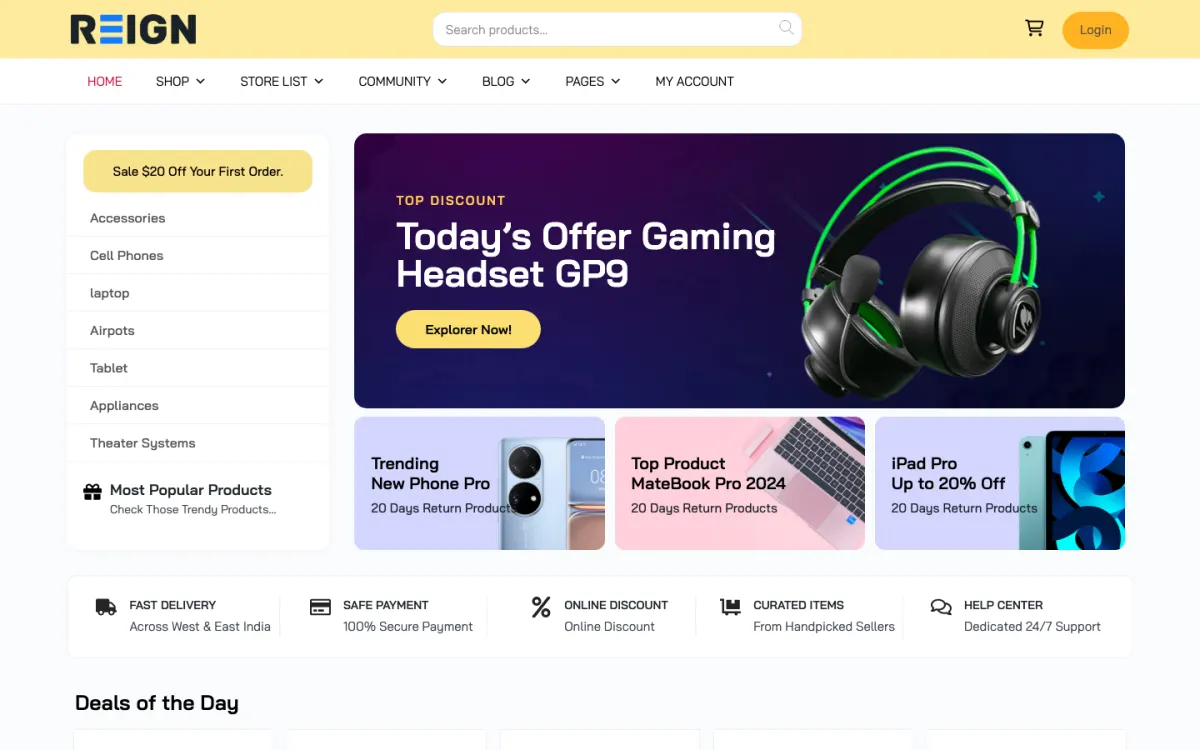
Three highlights for thrift / resale shops.

  • 01

    Self-hosted with full inventory control.

  • 02

    A new-arrivals feed that turns one-off stock into a reason to check back daily.

  • 03

    Community of repeat thrifters, with new drops announced through BuddyNext notifications.

What the site looks like on day one.

You launch with seller storefronts for one-off items, a browsable catalogue, and a feed where sellers show what has just landed. Resale is different from normal commerce in one important way: almost every item is unique and sells once, so the catalogue turns over constantly and the feed does the work a static shop page cannot.

What a member actually does.

A seller lists a few items and posts them to the feed. Buyers browse, and the ones who follow specific sellers come back daily because stock changes. The community matters more here than in most marketplaces: people follow sellers with taste, and a feed of new arrivals is the product. Sellers who post consistently outperform those who only list.

How this usually makes money.

Commission per sale, through the multi-vendor plugin, sometimes with a small listing fee to discourage dead stock. Because items are one-offs, volume comes from listing velocity rather than restocking, so the model rewards making listing fast. Anything that adds friction to listing an item directly reduces your revenue.

The mistake to avoid.

Making listing slow. Every item is unique and sells once, so your revenue is a direct function of how fast a seller can photograph and list something on a phone. Twelve required fields will quietly halve your inventory, and no amount of marketing recovers it.

Which Reign setup fits a resale marketplace

Reign is the WordPress theme for building a complete community site: social network, courses, member directory, marketplace and job board on one install. A resale market uses the marketplace and the social feed together.

The shop side is a multi-vendor commerce plugin. The StoreMate Dokan kit is the packaged route and the Dokan marketplace build guide covers the setup. BuddyNext installs free and adds profiles, follows and notifications, so a buyer who likes one seller's taste hears about new items.

WB Gamification, also free with no paid tier, can reward sellers for steady listing, but use it sparingly. The marketplace picker compares engines and the plugins page shows the free and Pro split for our own plugins.

Launch steps for a resale marketplace

Everything depends on how quickly a seller can get one item online. Test that before anything else.

  1. 01

    Install WordPress with Reign, your multi-vendor plugin and BuddyNext. The start page has the order.

  2. 02

    Build the vendor listing form with the fewest fields you can: photos, title, price, condition and size. Everything else is optional.

  3. 03

    Test the dashboard on a phone with a real seller. Time how long a listing takes and remove anything slowing it.

  4. 04

    Set stock to one per item and confirm that the first payment wins and the item shows as sold.

  5. 05

    Write your rules for condition grades, authenticity of branded goods, returns and shipping. Publish them before opening.

  6. 06

    Seed the market with your own sellers and a first run of items. Post a new-arrivals update every day for the first month.

What sellers and buyers do week to week

A seller's week is about batches. They photograph a pile of items, list them across a couple of evenings, post highlights in the feed and ship what sold. Sellers who list steadily and post their new pieces outperform those who list in bursts.

Buyers check in often because stock changes. They follow a handful of sellers, open the new-arrivals feed and buy the piece they like before someone else does. First payment wins, so quick buyers feel rewarded.

Your week is about moderation and keeping the listing flow fast. You check new sellers, handle condition disputes and look at where sellers abandon the listing form.

How a resale marketplace grows

Resale grows through repeat visits. When people know that a good piece might appear tomorrow, they check daily. Feature the best new arrivals on the homepage and send a short digest to followers.

Sellers with taste are your growth engine. Spotlight a seller each week, tell the story behind a collection and let buyers follow them. A marketplace with recognisable sellers feels like a shop with staff you know.

Local pick-up and swap events can strengthen the community if your market is regional. Eventonomy installs free and can list swap days with RSVPs, which brings the online and in-person sides together.

How to handle condition, disputes and trust in a resale market

Resale lives or dies on trust, because every item is different and the buyer cannot hold it. Three things build that trust: honest condition grades, clear photos and a fair way to settle disagreements. You set the standard for all three, and the sooner you write it down the fewer arguments you will have to settle by hand.

Start with condition grades. Keep them short and concrete, such as new with tags, like new, good and worn, with a sentence for each that says what a seller may and may not call it. Show the grade near the price on every listing and make it a required field, since it is the one detail buyers always check.

Photos come next. Ask for a front, a back, a label and any flaw, and show those prompts in the listing form on a phone. A seller who skips the flaw photo is the seller who ends up in a dispute, so make that prompt hard to miss without turning the form into a chore.

For disputes, publish a simple process. A buyer reports a problem within a set window, the seller replies, and you decide when they cannot agree. Say who pays for return postage in each case. Having the rule written before the first dispute turns an argument into a lookup.

Finally, use the community to reinforce trust. Sellers who answer questions quickly and post honest detail in the feed build a following, and buyers follow the sellers they trust. Feature those sellers on the homepage and thank them in public.

How to keep sellers listing week after week

Resale needs a constant flow of new items, and the flow depends on sellers who list steadily. Many start with enthusiasm and stop when the first pile is gone. Your job is to make the habit rewarding and the next step obvious.

Send a short weekly nudge to sellers: how many views their items had, which sold and one tip for the next batch. Use only what the dashboard records. Sellers who see activity are likelier to list again.

Use small recognition. A seller of the week in the feed, a badge for steady listing from WB Gamification and a homepage slot for the best new arrivals cost nothing and encourage effort.

Make the next listing easy. Remember a seller's defaults for postage and condition, and let them copy a previous listing as a starting point. Every field you pre-fill is a minute saved.

Mistakes specific to resale marketplaces

Making listing slow is the main one. Anything that adds friction to listing an item directly reduces your revenue, and no marketing recovers that.

Offering reservations is a quiet one. They sound kind but create held stock that does not sell and buyers who disappear. Most successful resale markets do not offer them.

Last, avoid vague authenticity promises. Decide whether you verify branded goods, who bears the risk and what a buyer can do, and write it down before your first dispute.

When a different setup fits better

If you run one shop selling your own stock, a normal store is simpler than a marketplace. If your makers produce new handmade items rather than one-offs, see the handmade page.

If your sellers are professionals with large inventory, an inventory tool may serve you better than a phone-first dashboard.

Thrift / resale shop-specific questions.

Photo workflow for consignment items?

Sellers photograph on a phone and list through the vendor dashboard. Keep the required fields to a minimum, and pre-set condition and size options so a listing takes a minute.

How do I handle one-off stock?

Set inventory to one and let the plugin mark it sold. The real work is making listing fast: mobile photos, minimal required fields, saved defaults. A seller who has to fill twelve fields per item will list five things and stop.

Can sellers list from their phone?

That is the main thing to optimise for, because resale listing happens wherever the item is. Test the vendor dashboard on a phone before launch and cut every field you do not strictly need. This single decision affects listing volume more than any feature.

What about condition and authenticity?

Use product attributes for condition and require photos. Authenticity for branded goods is a policy question rather than a plugin one: decide whether you verify, who bears the risk, and write it down before your first dispute rather than during it.

What happens when two people want the same item?

First payment wins, and the plugin marks it sold. Make that rule explicit in your guidelines, because unique stock means disappointed buyers are routine and a published rule prevents most of the arguments.

Can sellers reserve items?

Technically yes, commercially it is usually a mistake. Reservations mean held stock that does not sell and buyers who disappear. Most successful resale markets simply do not offer it.

Get the StoreMate Dokan kit.

Or have the Wbcom team set it up for you.

One theme, the whole site

See what you can build with Reign, then try it.

Reign is the WordPress theme for building a complete community site: social network, courses, member directory, marketplace and job board on one install. Start with one, add the others when you need them, and keep one login for every member. Open a live demo, or launch a sandbox and get a fresh WordPress site to click through in about a minute.

Add more when you need it

Not sure which setup fits your site?

Tell us what you want members to do on your site. We will tell you which Reign setup, plugins and kit fit, before you buy anything.

What customers say on Trustpilot

WBComDesigns is amazing!

WBComDesigns is amazing. The WP plugins and themes are of top notch quality with lots of features and updated very frequently. Supports are very responsive and helpful. I use Reign with TutorLMS, and the experience is surprisingly smooth. The recently launched BuddyNext Pro and MediaShield Pro are…

Hoang PhanVN