REIGN
Get Reign

For mastermind group leaders

Reign for mastermind group leaders. Paid mastermind and accountability community.

Keep pods small and private: one BuddyNext space per pod with six to eight members, an Eventonomy calendar for meetings, a recurring accountability thread, and MediaVerse for the session archive. Members renew because of the thread between meetings. Reign gives each pod a calm, private-feeling room.

Mastermind leaders use Zoom, a private chat workspace and a spreadsheet for billing, so clients churn when the commitment ends and there is no archive of past sessions.

Reign + Learnomy + BuddyNext for cohort-based masterminds with persistent spaces, a searchable session archive and a renewal offer. Learnomy and BuddyNext install free; Tutor LMS is the alternative.

Cohort courses, groups that outlive the program and the session archive, free to install. You buy the Reign theme; Learnomy, BuddyNext and MediaVerse are ours and install free.

  • Learnomy courses
  • BuddyNext community engine
  • MediaVerse media

Key takeaways for mastermind group leaders

  • Six to eight people means everyone speaks. Fifteen is a webinar with a chat, which is worth considerably less.
  • The accountability thread keeps a pod alive between meetings. Somebody has to prompt it.
  • Add more pods instead of growing the ones you have.
  • Learnomy, BuddyNext and MediaVerse install free. See pricing for the Reign licence.

What it looks like on Reign

Screens from the live demos, with sample content. Open any of them and click around.

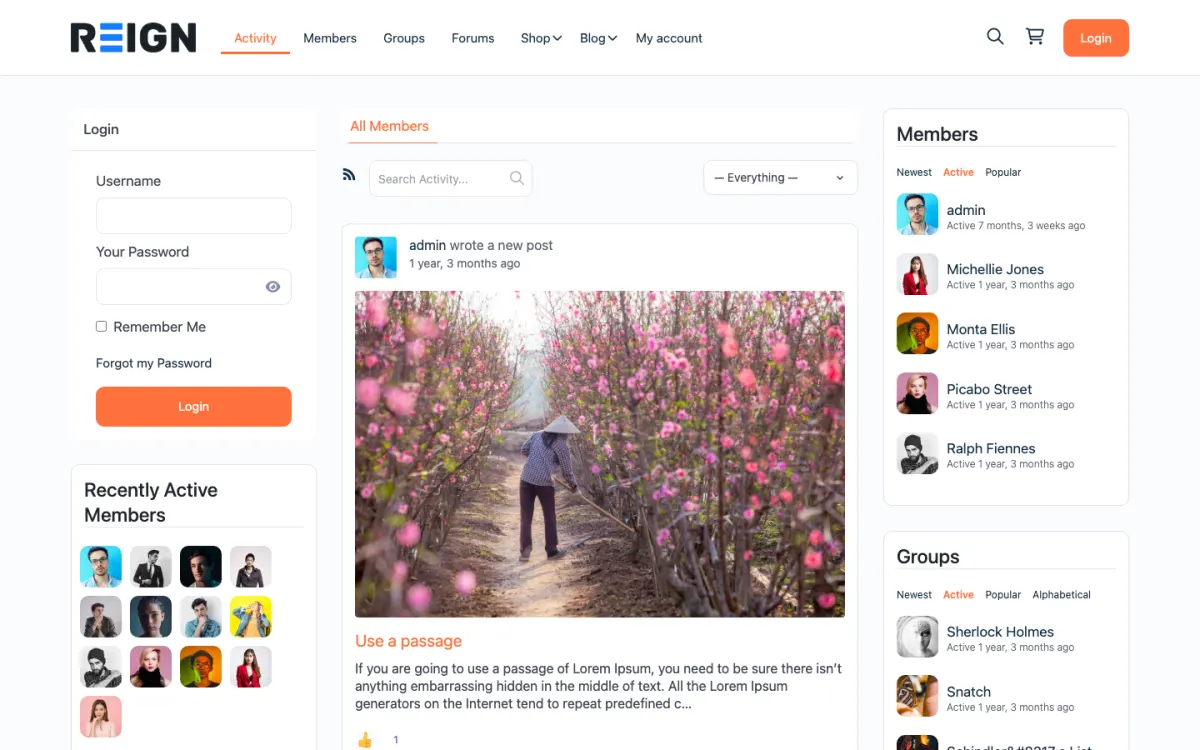
  • Reign BuddyPress demo home with login, activity feed, members and groups
    The home screen: sign-in, the activity feed and who is active, on one page. Open the demo
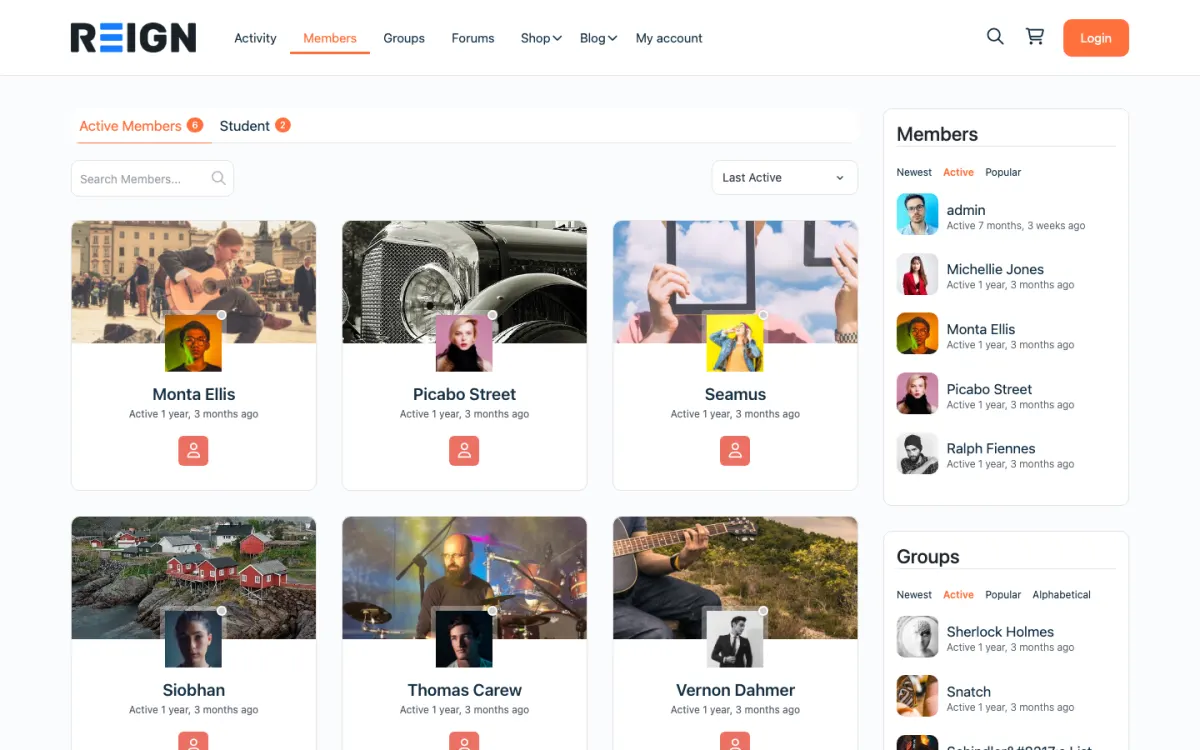
  • Reign members directory with member cards, search and sort
    The member directory: search, sort by activity, and a card for every member. Open the demo
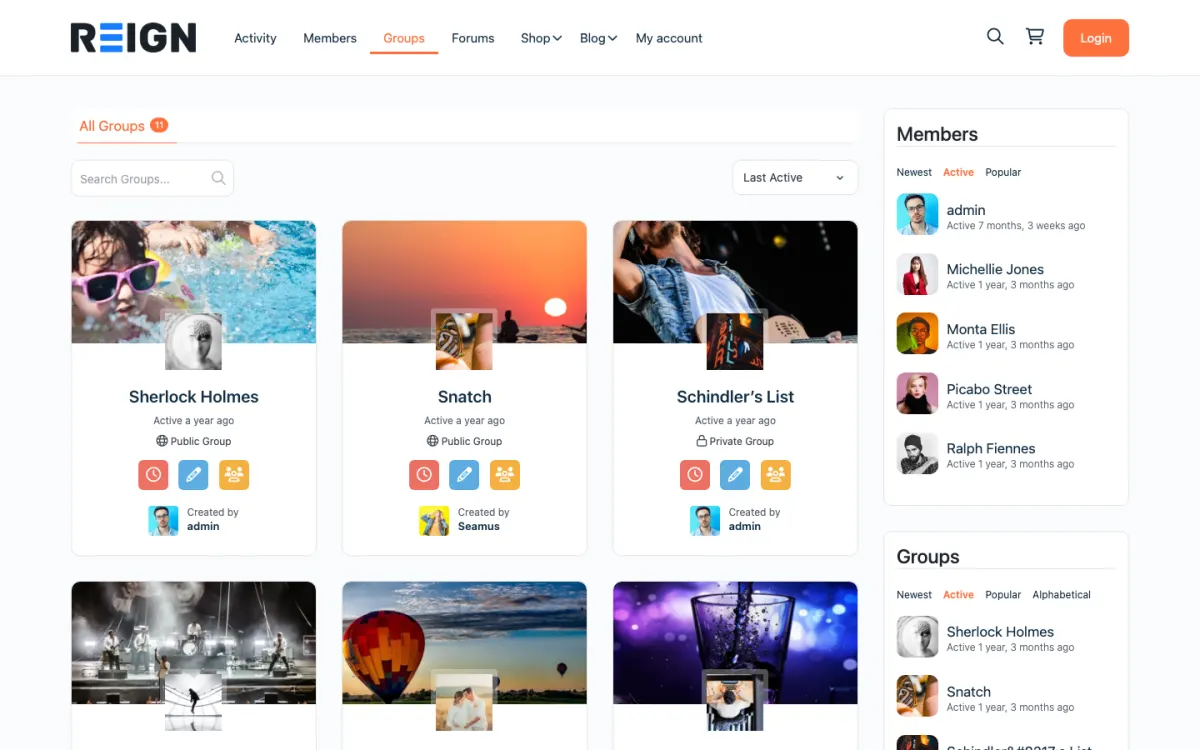
  • Reign groups directory with public and private groups
    Groups: public and private spaces members can join or create. Open the demo

Three highlights for mastermind group leaders.

  • 01

    Per-cohort BuddyNext spaces that persist after the programme ends.

  • 02

    A searchable archive of past mastermind sessions.

  • 03

    A renewal offer that moves members on to an ongoing tier.

What the site looks like on day one.

You launch with small private groups, a meeting calendar, accountability threads and a resource library. Each mastermind pod gets its own space with only its members inside, meetings are events with RSVPs, and accountability is a recurring thread. Small and private is the whole design; a mastermind that feels like a public forum is not a mastermind.

What a member actually does.

A member joins a pod, attends the first meeting, and posts their commitments. The accountability thread is what makes it work between meetings, and the pods that maintain it are the ones that renew. Groups that let the thread go quiet drift within two months. Facilitation matters more than software here, and the site's job is to make the rhythm easy.

How this usually makes money.

Paid memberships priced by the market and the level of facilitation, which is high for a community but reflects that members are buying access to each other and to you. Some run an application fee. The economics work because pods are small and the price is per member rather than per pod.

The mistake to avoid.

Letting the pods get too big. Six to eight people means everyone speaks; fifteen means a webinar with a chat, which is a different product worth considerably less. Keep pods small and add more of them rather than growing the ones you have.

Which Reign setup fits a mastermind business

Reign is the WordPress theme for building a complete community site: social network, courses, member directory, marketplace and job board on one install. A mastermind uses the social network in small private rooms.

BuddyNext supplies private spaces per pod, profiles, notifications and messages with WPMediaVerse active. MediaVerse, free, holds the recordings and shared files, with privacy levels so only the pod sees them. Eventonomy schedules the meetings with RSVPs and recurring dates. Learnomy holds any shared frameworks or onboarding as lessons and sells access with Stripe or PayPal checkout.

If you teach on Tutor LMS, the Reign TutorLMS kit is the packaged route and the coaching platform build guide covers the structure. The plugins page shows the split, and Reign is a flat theme licence with no per-pod fee.

Launch steps for a mastermind

Small and private is the whole design. Do not let the site pull you toward a big open room.

  1. 01

    Decide your pod size and your selection process. Write the application questions that tell you who will contribute.

  2. 02

    Install WordPress with Reign, BuddyNext and Eventonomy. The start page lists the order.

  3. 03

    Create a private space for the first pod and add members only after they have paid and been approved.

  4. 04

    Schedule the first quarter of meetings as recurring events with RSVPs, and post the agenda format in the space.

  5. 05

    Start the accountability thread with a fixed prompt: last week's commitment, what happened, this week's commitment.

  6. 06

    Record sessions only with consent from everyone in the pod, store them in a private album and tell members exactly who can see them.

What members do week to week

Before a meeting, members post their commitments for the period in the thread. At the meeting they present a problem, receive questions from the pod and leave with one thing to do. Afterwards they post what they will do and when.

Between meetings, the pods that renew keep the thread alive. Members share small updates, ask for quick opinions and celebrate wins. Commitments posted publicly to five people you respect do more than any feature.

A facilitator's week is about prompting: posting the thread, nudging quiet members and spotting pods that are slipping. When a pod goes quiet, intervene quickly, because a quiet pod rarely recovers on its own.

How a mastermind business grows

Growth means more pods, not larger ones. One site can hold many private spaces, each with its own members and rhythm, which is far easier to run than separate platforms per pod.

Training members to facilitate is the usual path past your own hours. Decide early whether you are in the business of facilitating personally at a premium or building a programme where trained facilitators run pods.

A searchable archive of sessions, kept private to each pod, makes renewal easier because a member can see their own progress. Alumni spaces let former members stay connected and send referrals.

How to choose members and set up each pod well

A mastermind is only as good as the mix of people in each pod. You are selling access to peers as much as access to you, so selection is the most important thing you do. Do it with care and the software barely matters.

Use a short application. Ask what the applicant is working on, what they want from the group, what they can offer others and how much time they can commit. The answers show you who will contribute and who will only listen. A polite no to someone who would not fit protects the members who would.

Match members into pods on stage and situation, not on enthusiasm. People at a similar point in their business have problems the others recognise, and that is what makes the advice useful. If you mix very different stages, the newer member learns a lot and the more experienced one leaves.

Run a short kick-off session for each new pod. Cover the format of a meeting, the confidentiality rule, how commitments are posted and what happens if someone misses sessions. Write the same points in the pod space so members can find them later.

Plan the end of a pod as carefully as the start. At the close, ask each member what they got, whether they want to continue and whether anyone wants to move pods. Use the answers to reform pods, and move members who have outgrown a group to one that fits.

How to run the meetings themselves

The site holds the rhythm, but the meeting is the product. A well-run session leaves everyone with a clear next step, and a poor one feels like a chat. Give the format as much thought as the platform.

Use a fixed agenda: a short check-in on last period's commitments, one or two members take a hot seat, the group asks questions before offering advice, and everyone closes with a commitment. Post the agenda in the pod space so it is always the same.

Keep time. Share the time among members, and appoint a rotating timekeeper. A pod where one person always runs over loses the others.

Record notes, not video, by default. A shared post with decisions and commitments is easier to review than a recording, and it respects privacy. Record only with consent and store it in the private album.

Mistakes specific to masterminds

Letting pods get too big is the main one. The format only works while everyone speaks.

Waiting a month to see if a quiet pod recovers is the second. It almost always ends in cancellations.

Third, do not mix levels in one pod. A founder at the beginning and one with a team need different things, and the pod serves neither.

When a different setup fits better

If you run a course-led cohort with one start date, see the life coaches page. If you want a free, open community with a paid private tier, the indie hackers page has that structure.

If you run a single pod with friends, a group chat and a shared document do the job.

Mastermind group leader-specific questions.

Can clients re-watch past sessions?

Yes, through a tier-gated MediaVerse library, free to install. Past clients keep access to their cohort recordings indefinitely.

How small should a pod be?

Small enough that everyone speaks, which in practice is six to eight. The software supports any size; the format does not. Larger groups become a webinar with a chat, which is a different product and worth considerably less.

Can I run several pods?

Yes, a private group per pod with members only in theirs, plus a shared space for everyone if you want cross-pod discussion. One site, one membership, many pods, which is far easier to run than separate platforms per group.

What keeps a pod alive between meetings?

The accountability thread, and somebody whose job it is to prompt it. Commitments posted publicly to five people you respect do more than any feature. When the thread dies the pod follows within a couple of months.

Do I facilitate every pod myself?

At first, usually, and it does not scale. The model that works is training members to facilitate and taking a cut, or charging more for pods you run personally. Decide which business you are in early.

What if a pod goes quiet?

Intervene quickly, because a quiet pod rarely recovers on its own. Usually it needs one member re-engaged or the pod merged. Waiting a month to see if it picks up almost always ends in cancellations.

Buy the theme. Add the plugins free.

Learnomy, BuddyNext and MediaVerse cost nothing to install, and each has its own Pro plan for later. Running the third-party stack instead? The Reign TutorLMS kit is the packaged route. Or have the Wbcom team set either one up for you.

One theme, the whole site

See what you can build with Reign, then try it.

Reign is the WordPress theme for building a complete community site: social network, courses, member directory, marketplace and job board on one install. Start with one, add the others when you need them, and keep one login for every member. Open a live demo, or launch a sandbox and get a fresh WordPress site to click through in about a minute.

Add more when you need it

Not sure which setup fits your site?

Tell us what you want members to do on your site. We will tell you which Reign setup, plugins and kit fit, before you buy anything.

What customers say on Trustpilot

Excellent Theme, Powerful Plugins and Outstanding Support

I am using the REIGN theme and several plugins from Wbcom Designs on my website. The theme is beautifully designed, and the plugins are user-friendly. Everything works smoothly, and the features are perfect for building professional websites and communities. What impressed me most is their…

S W MalcolmUS