Reign for podcast hosts. Podcast community and premium membership.
Make your site the searchable home of the show: an episode page for every release with the embedded player, show notes and a transcript, a BuddyNext community where listeners talk to each other, and a supporter area for bonus material. Keep distribution with a podcast host. Reign gives the archive and the community one look.
Podcast hosts use Patreon for premium episodes, Discord for community and a basic page for show notes, which spreads listeners across tools and keeps conversion low.
Reign + BuddyNext hosts episode pages, show notes and the listener community on one site. BuddyNext installs free, and its Pro plan adds paid plans and gated spaces for supporters.
The listener feed, episode discussion threads and photo and video uploads, free to install. You buy the Reign theme; BuddyNext, Jetonomy and MediaVerse are ours and install free.
Audio is invisible to search. Transcripts on episode pages are the single biggest SEO win a podcast has.
Use a podcast host for distribution and embed the player. The site is the archive, the community and the membership.
Supporters pay for something only members get: early episodes, bonus material or the discussion itself.
BuddyNext and Jetonomy install free; paid plans and gated spaces are BuddyNext Pro. See pricing.
What it looks like on Reign
Screens from the live demos, with sample content. Open any of them and click around.
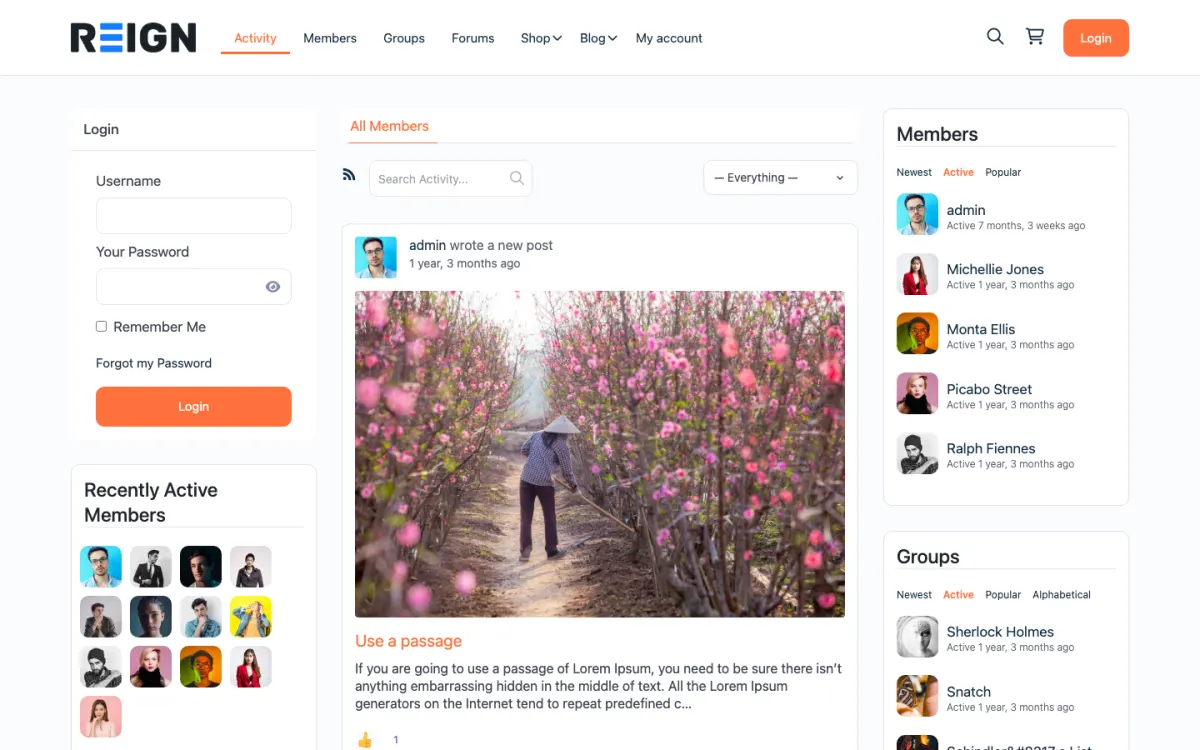
The home screen: sign-in, the activity feed and who is active, on one page. Open the demo
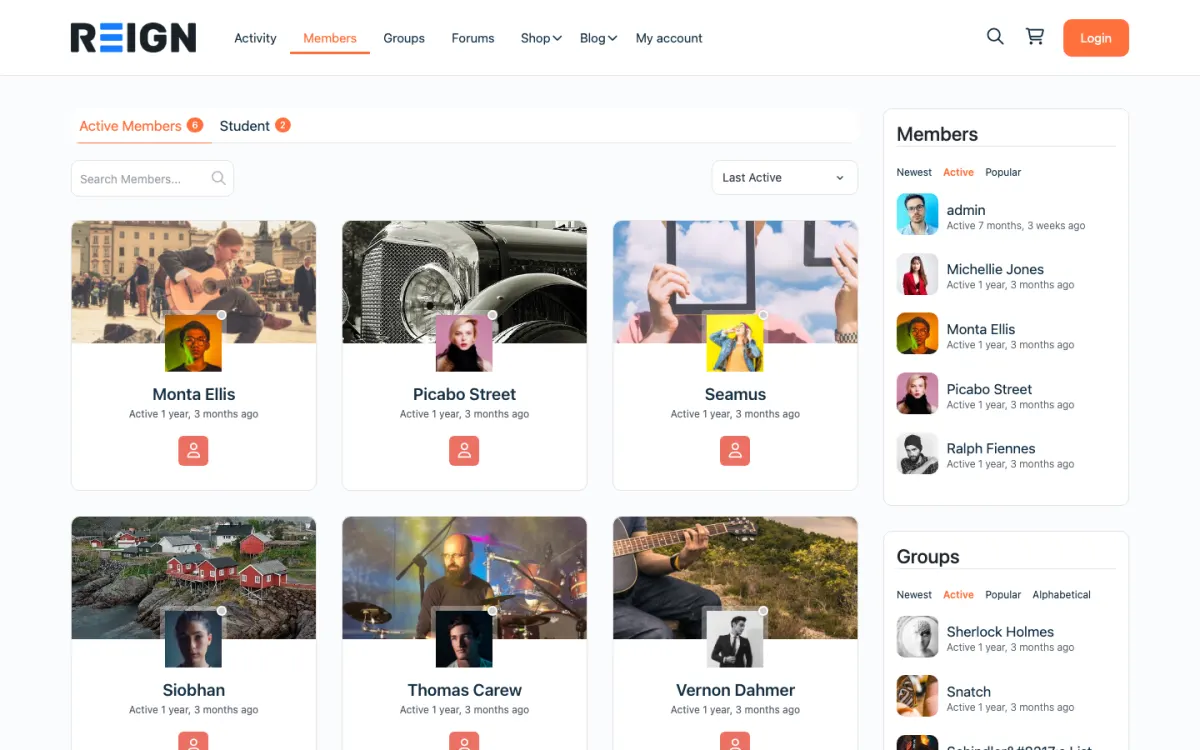
The member directory: search, sort by activity, and a card for every member. Open the demo
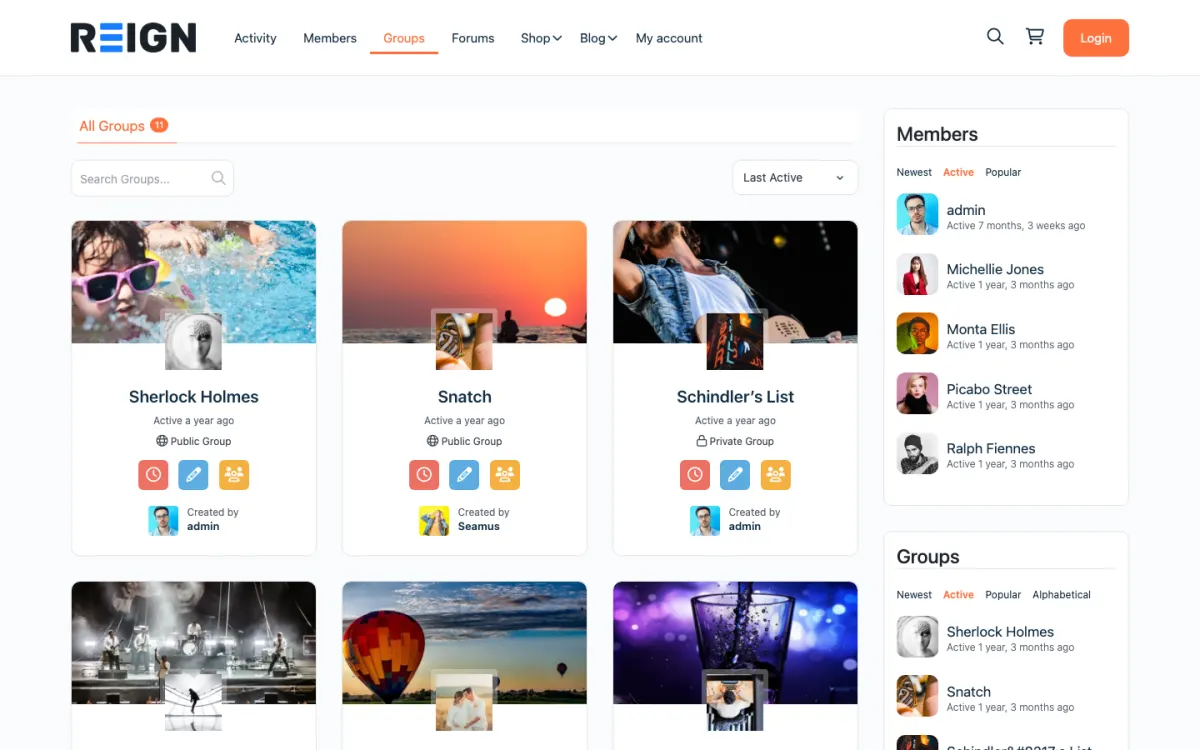
Groups: public and private spaces members can join or create. Open the demo
Three highlights for podcast hosts.
01
Supporter plans on your own site, so you keep the subscriber emails and the whole payment.
02
Episode-specific discussion threads in Jetonomy, free to install.
03
Show notes on episode pages that search engines can index.
What the site looks like on day one.
You launch with an episode archive, a members area for supporters, and a discussion space per episode or topic. Episodes are posts with the player embedded and show notes attached, supporters get a tier with bonus material, and the community is where listeners talk to each other rather than only to you. Episode pages become the searchable archive a podcast host otherwise never owns.
What a member actually does.
A listener finds an episode through search, listens, and reads the notes. Becoming a member happens when there is something only members get: early episodes, bonus material, or the discussion itself. Once inside, the ones who post are the ones who renew. Over months the episode archive becomes the thing bringing in new listeners, because transcripts and notes rank where audio cannot.
How this usually makes money.
Supporter memberships are the common model, with bonus episodes and ad-free feeds as the reward. Sponsorship remains the larger line for most shows, and having your own site with real traffic improves what you can charge. Some hosts sell courses or live events to the same list, which is where the membership base pays off.
The mistake to avoid.
Not publishing transcripts. Audio is invisible to search, so a podcast without transcripts has no way of being discovered by anyone not already listening. Even rough automatic transcripts on episode pages bring in traffic that no amount of promotion matches.
Which Reign setup fits a podcast community
Reign is the WordPress theme for building a complete community site: social network, courses, member directory, marketplace and job board on one install. A podcast uses the community and the membership layer.
BuddyNext provides profiles, a feed and spaces for listeners, and its Pro plan adds paid plans and gated spaces plus Stripe checkout, which is how you set up a supporter tier. Jetonomy gives you threaded discussions with one thread per episode, voting and a moderation queue. MediaVerse, free, lets members share photos and videos, which suits fan art or live-show photos.
Start by making the archive findable. The membership can follow once the site is bringing in listeners.
01
Install WordPress with Reign and set up an episode post format: title, embedded player, show notes, guest links and a transcript.
02
Backfill your best twenty episodes first, with transcripts, even rough automatic ones. Link related episodes to each other.
03
Install BuddyNext and Jetonomy. Open a space per topic or one thread per new episode, and post your own question under each release.
04
Decide what supporters get: early access, bonus episodes, an ad-free listen or a private space. Do not promise more than you can deliver weekly.
05
If you plan a private feed, check how your podcast host supports it and test it in more than one podcast app before launching the tier.
06
Mention the site in the show itself, not only in the description, and say what is there that listeners cannot get elsewhere.
What listeners do week to week
A listener hears a new episode, then visits the page for the show notes or a link the guest mentioned. If the episode raised a question, they check the discussion thread and add a comment. Some visit to find an older episode on a topic they remember and use the site search.
Supporters come for the extra material. They read the bonus notes, join a conversation with other supporters and sometimes ask a question for the next live recording. The ones who post are the ones who renew, because the discussion becomes part of the show.
Your week follows the release schedule. You publish the episode and notes, post a prompt in the thread, reply to the best comments and mention a listener's idea on the next episode. That mention does more for retention than any badge.
How a podcast community grows
Search is the quiet engine. A transcript-rich archive gets found by people who have never heard of the show, and those people become listeners. Over months the archive does more for growth than promotion on other shows.
Supporters grow from the audience you already have. Do not rush to move listeners off other platforms; give them something that only exists on your site and mention it regularly. A small share will move, and they are the most committed.
Add formats when the community asks. Live recordings, listener question episodes and themed seasons all work well with an active thread behind them. Courses or live events can be sold to the same list when it makes sense.
How to work with guests and sponsors on your own site
Owning the episode pages changes how guests and sponsors treat your show. They get a proper page to share, and you get a place to show them what the show delivers. Use that deliberately.
Treat each guest page as a gift. Include a clean photo, a short bio, links to their work and a few pulled quotes. Send the guest the link on release day and ask them to share it. A guest who sees their page looks professional is more likely to promote it.
Give sponsors something real to read. A page that shows where their message appears, how episodes are presented and what listeners discuss is more convincing than a list of download counts. Only quote figures you can back with your own host reports.
Keep sponsor messages honest and labelled. Say plainly which parts of a page are sponsored. Listeners accept advertising that is declared and resent advertising that hides.
Invite guests into the discussion. A quick question from the host under each episode, and a nudge to the guest to reply, often produces the best thread of the week and makes the community feel connected to the show.
Mistakes specific to podcast communities
Not publishing transcripts is the main one. Audio is invisible to search, so a show with no text has no way to be discovered by anyone not already listening.
Hosting audio on a general web host is the second. Bandwidth and feed requirements are a poor fit. Use a podcast host and embed the player.
Third, do not launch a supporter tier before the audience asks for it. A tier with three members and a heavy promise feels like a chore.
If you only want to take occasional tips, a donation link is simpler than a membership.
Podcast host-specific questions.
Can I host audio directly?
You can, but a dedicated podcast host is the safer choice for distribution. Keep the episode pages, show notes and community on your site and embed the player.
Should I leave Patreon for my own site?
You do not have to choose. Patreon is a quick way to take supporter payments, and many shows run it alongside their own site. Move to your own site when you want the community, the archive and the subscriber list in one place that you control.
Can I host the audio here?
You can, but use a proper podcast host and embed the player. Audio hosting has bandwidth and RSS requirements that a general web host handles badly. The site is the archive, the community and the membership; the podcast host does distribution.
How do I give members a private feed?
That is a feature of your podcast host or a podcasting plugin, not of the theme or the community plugins. If you plan a bonus feed, check how your host handles private feeds and test it in a few podcast apps before you launch the tier.
Do transcripts matter?
They are the single biggest SEO win available to a podcast. Audio is invisible to search; a transcript on the episode page is not. Even lightly cleaned automatic transcripts bring in traffic no amount of promotion would.
Do I need a separate membership platform?
No, and that is largely the point. Paid plans and gated spaces on your own site handle tiers and payments, and you keep the subscriber emails and the whole payment.
How do I move listeners from a platform?
Slowly, with something that only exists on your site: bonus episodes, an archive, the community. Mention it in the show rather than only in the notes, and accept that a small share converts.
Buy the theme. Add the plugins free.
BuddyNext, Jetonomy and MediaVerse cost nothing to install, and each has its own Pro plan for later. Running the third-party stack instead? The BuddyPress Community Bundle kit is the packaged route. Or have the Wbcom team set either one up for you.
Reign is the WordPress theme for building a complete community site: social network, courses, member directory,
marketplace and job board on one install. Start with one, add the others when you need them, and keep one login
for every member. Open a live demo, or launch a sandbox and get a fresh WordPress site to click through in about a minute.
Community and social network
Profiles, activity feed, spaces, messages and moderation on your own domain. Powered by BuddyNext.
I only have positive experience with wbcom. My journey started a lot of years back with the free buddyx theme. during my learning of wordpress and futher websites ideas I found a match with their Reign job mate theme. Always there to help, always open to explore ideas, always kind replyes even if I…
Oskar Hanborg · SE ·
Swift and expert coding!
Swift and expert coding by Kerit to apply a personalised display adjustment on the Reign Theme for a media plugin that was not fully supported at the moment.
Russell · GB ·
Perfect themes
I purchased Reign theme from Wbcom Designs, the support team was very helpful and I got the perfect website what I was looking for. Good work Wbcom Designs
Monika Singh · IN ·
WBComDesigns is amazing!
WBComDesigns is amazing. The WP plugins and themes are of top notch quality with lots of features and updated very frequently. Supports are very responsive and helpful. I use Reign with TutorLMS, and the experience is surprisingly smooth. The recently launched BuddyNext Pro and MediaShield Pro are…
Hoang Phan · VN ·
Love this company
Love this company. Loved the REIGN product. They were there the entire time helping me set things up; and when things went wrong? They were quick to take action and help find a solution.
Fable Fortitude · CA ·
Excellent Theme, Powerful Plugins and Outstanding Support
I am using the REIGN theme and several plugins from Wbcom Designs on my website. The theme is beautifully designed, and the plugins are user-friendly. Everything works smoothly, and the features are perfect for building professional websites and communities. What impressed me most is their…
S W Malcolm · US ·
Helped With Setting Up Theme
Camila Scot of Wbcom was helpful. I got a super prompt help with my BuddyX Theme. Although I am a free version user, I got irst attention. I am satisfied. I will eventually buy the lifetime version once we fully deploy it and we are sure it meets our need.
Anthony Esezobor · NG ·
Good support
I've used several of their plugins. Occasionally support was needed but they were quite prompt in their support and solved the issue.
Cheryl Dimof · US ·
A plugin made a conflict and they fixed…
A plugin made a conflict and they fixed it immediately, great plugins anf great support.
Eric Hinz · DE ·
Great Blog Page
They provided me great advice on how to achieve the best display and function for my blog.