

WooCommerce 10.0 has officially launched, and with it comes a wave of enhancements that underscore the platform’s evolution from a flexible WordPress plugin to a sophisticated ecommerce engine. Powering over 5 million active stores globally, WooCommerce has long been the go-to solution for small businesses and enterprises alike. With this release, it’s clear the WooCommerce ecosystem is gearing up for a more scalable, secure, and user-friendly future.
If you’re running a WooCommerce-powered store or planning to build one, this major version update demands your attention. From developer-focused improvements to speed gains and modernized architecture, WooCommerce 10.0 sets the stage for the next decade of open-source ecommerce.
Let’s break down what’s new, why it matters, and how you can prepare your store for what’s coming next.

WooCommerce 10.0: Key Release Facts and Figures
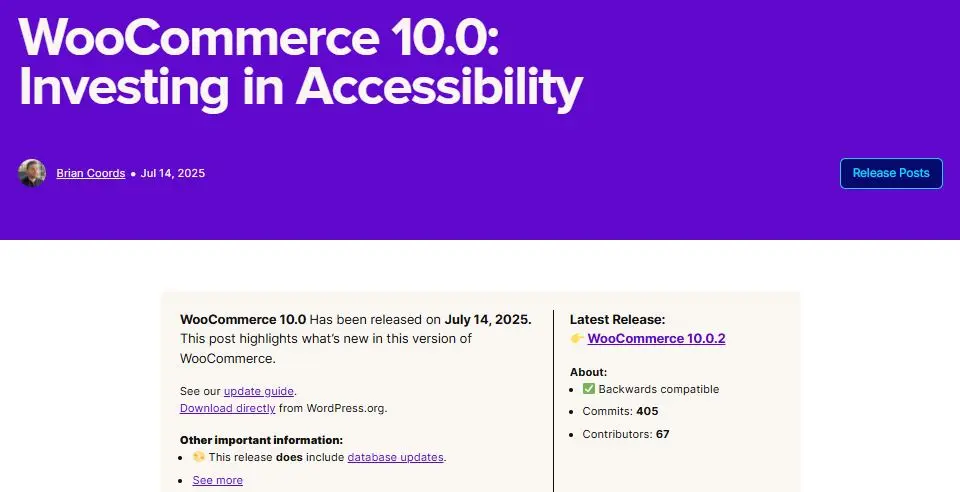
- Official Launch Date: July 17, 2025
- Latest Stable Version: 10.0.2 (within the 10.0.x series)
- Total Code Commits: 405
- Community Contributors: 67 developers participated
- Database Changes: No updates required
- Compatibility Status: Fully backward compatible with previous versions
Why WooCommerce 10.0 Matters
While minor WooCommerce updates focus on incremental fixes and compatibility changes, version 10.0 introduces foundational improvements that affect performance, extensibility, and long-term site stability. It reflects a shift toward modern PHP practices, improved block-based customization, and clearer development pathways.
This release isn’t just a feature dump - it’s a signal that WooCommerce is entering a more mature phase, prioritizing performance at scale, extensibility, and ease of use for store owners and developers alike.
Key focus areas in WooCommerce 10.0 include:
-
Performance optimization for high-traffic stores
-
Increased block editor integration
-
Database enhancements
-
Developer-friendly architecture
-
Improved onboarding and UI/UX for merchants
What’s New in WooCommerce 10.0?
1. Introduction of New Store Editing Blocks
WooCommerce 10.0 continues the platform’s journey into full site editing (FSE) territory. With expanded support for block-based customization, users can now design key parts of the shopping experience visually - from product grids to cart elements and checkout pages.
New blocks introduced include:
-
Product Collection Block: Easily display product groups filtered by categories, tags, or custom attributes.
-
Cart & Checkout Blocks: Faster, more flexible, and mobile-first by design.
-
Order Confirmation Block: A refreshed order summary with clearer visuals and UX.
Why it matters: The move to block-based editing makes customization more intuitive for store owners and significantly reduces reliance on third-party builders.
2. Faster Page Load Speeds with Optimized Assets
Speed remains one of the biggest factors in ecommerce conversions. WooCommerce 10.0 addresses this with:
-
Consolidated and lazy-loaded scripts
-
Smarter enqueuing of assets based on usage
-
Reduced CSS footprint on non-store pages
According to internal benchmarks, some stores reported up to 35% improvement in page load speed after upgrading.
This directly translates into better SEO, reduced bounce rates, and improved mobile experience - all critical to staying competitive in 2025.
3. Product Data Tables Performance Upgrade
One of the most important backend updates in WooCommerce 10.0 is the continued rollout of custom product data tables.
Traditionally, WooCommerce stored product information in WordPress’s default wp_postmeta tables - leading to bloated databases and performance bottlenecks. The new structure moves core product data into purpose-built custom tables, such as:
-
wp_wc_products -
wp_wc_product_meta_lookup
This shift provides faster product lookups, more efficient queries, and a cleaner database architecture.
While optional for now, the long-term roadmap aims to make these custom tables the default, dramatically improving large-store scalability.
Developer-Centric Enhancements
WooCommerce 10.0 introduces several under-the-hood changes that streamline development and make the platform more extensible:
1. PHP 8.2+ Compatibility
WooCommerce 10.0 is fully compatible with PHP 8.2, ensuring your store takes advantage of performance gains, security patches, and long-term support from the PHP ecosystem.
2. Action Scheduler Improvements
The action scheduler - a key component that powers background tasks like subscription renewals and follow-up emails - has received updates to handle high volumes more reliably, especially in stores with heavy automation workflows.
3. Deprecation of Legacy Functions
As WooCommerce modernizes, legacy functions and outdated APIs are being deprecated. This encourages plugin and theme developers to adopt the latest coding standards, ensuring compatibility and better long-term maintainability.
Enhanced User Experience for Store Owners
Beyond code improvements, WooCommerce 10.0 also delivers a smoother experience for merchants:
1. Guided Setup Improvements
The onboarding flow now includes smart recommendations for:
-
Popular shipping integrations
-
Recommended payment gateways (region-specific)
-
Store design based on industry type
New merchants benefit from faster time-to-launch and fewer technical roadblocks.
2. Clearer Analytics Dashboards
Merchants can now get a better overview of store performance via updated dashboard widgets, streamlined reports, and real-time insights.
If you’re running promotions or optimizing product pricing, this data visibility helps you make smarter decisions on the fly.
3. Product Creation Workflow
Creating a product is now simpler, with a refreshed interface that:
-
Separates key fields (title, price, inventory)
-
Offers inline tips and validation
-
Includes one-click suggestions for cross-sells and up-sells
This lowers the learning curve for new users while giving power users faster control.
Compatibility and Upgrade Notes
Before upgrading to WooCommerce 10.0, it’s important to ensure that your current stack is ready. Here’s what to check:
-
PHP 7.4 is no longer supported. Ensure your server is running at least PHP 8.0 (8.2+ is ideal).
-
WordPress version 6.2+ is recommended.
-
Check all plugins for 10.0 compatibility. Use staging environments to test before deploying live.
-
Backup your database and files. Always use a full backup before major updates.
-
If using custom code or templates, test thoroughly. Some hooks and templates have changed.
WooCommerce recommends using their official Rollbacks plugin to revert if needed - but it’s better to prevent issues before they occur.
What This Means for WooCommerce Stores in 2025
WooCommerce 10.0 is not just a version update - it’s a new foundation for ecommerce growth on WordPress. Here’s what store owners can expect moving forward:
1. Better Performance = Higher Conversions
Page speed and checkout experience are major conversion drivers. With WooCommerce 10.0 improving both, store owners can anticipate better revenue outcomes with the same traffic.
2. Easier Design and Customization
More blocks, more control, fewer dependencies. This is great news for merchants who want to run their stores without relying on developers - or for agencies building scalable ecommerce experiences.
3. More Reliable Automation
With action scheduler and product data improvements, high-volume stores can finally run complex automations with fewer hiccups or database slowdowns.
What’s Coming Next?
The WooCommerce team has outlined a promising roadmap beyond 10.0. Expect:
- More extensive use of block-based checkout for all themes
- Full transition to custom product and order tables
- AI-powered merchandising tools
- Native multi-language and multi-currency support
As competition in the ecommerce space grows, WooCommerce’s open-source foundation ensures flexibility while evolving fast enough to compete with Shopify, BigCommerce, and Adobe Commerce.

Final Thoughts
WooCommerce 10.0 marks a pivotal moment for WordPress ecommerce. With faster speeds, modern architecture, and greater customization tools, it empowers both developers and non-technical users to build more ambitious online stores without sacrificing control.
If you haven’t already, start testing the upgrade in a staging environment. The benefits are clear: better performance, more intuitive design tools, and a future-proof foundation that will support your store as it scales.
As WooCommerce continues to evolve, version 10.0 is a bold step forward - and it’s one every store owner should embrace.
Interesting Reads:
Top eCommerce Platforms in 2025: Which One Is Right for You?
Building a Multi-Vendor Marketplace with Reign and WooCommerce