

Artificial intelligence (AI) is revolutionizing the way we interact with technology, offering everything from advanced data analysis to creative content generation. However, as AI grows in capability, there’s a rising need to identify AI-generated content, whether it’s for academic integrity, content moderation, or detecting deepfakes.
With AI infiltrating various industries, it’s essential to have reliable AI detection tools to maintain authenticity and ensure transparency. In this blog post, we’ll dive deep into the 10 best AI detection tools that can help you stay ahead in this evolving landscape.

What Makes AI Detection Tools So Important?
In today’s digital world, AI is everywhere. It’s used in everything from chatbots to automated content creation. While AI brings a wealth of opportunities, it also presents significant challenges, such as the ability to create realistic fake content. Whether it’s in the form of articles, images, videos, or even voices, AI can generate content that closely mimics human creation.
AI detection tools are designed to solve this problem by identifying when content is AI-generated. They analyze various elements of the content, such as writing style, sentence structure, and even image inconsistencies, to determine whether a machine created it. These tools are becoming indispensable in areas like education, journalism, and digital forensics.
The 10 Best AI Detection Tools of 2024
Now, let’s take a closer look at the 10 best AI detection tools that are making waves in the industry. Each tool offers unique features, making them stand out in the crowded space of AI detection. Whether you’re a content creator, educator, or security professional, these tools will help you spot AI-generated content with precision.
1. GPTZero: The Pioneer in AI Writing Detection

Overview:
GPTZero is one of the most popular AI detection tools, especially when it comes to identifying AI-generated text. Developed by a Princeton student, it quickly became a favorite due to its accuracy and ease of use.
Key Features:
- Detects AI writing in seconds
- Offers both free and premium versions
- Analyzes the randomness and complexity of text
Pros:
- Fast and efficient
- Great for academic and professional use
- Easy-to-use interface
Cons:
- The free version is limited
- Occasionally misses nuanced AI-generated content
Use Cases:
GPTZero is ideal for educators, journalists, and content creators who need a reliable way to identify AI-written text in essays, articles, and other documents.
2. CopyLeaks: Detects Plagiarism and AI Content
Overview:
While CopyLeaks started as a plagiarism detection tool, it has evolved into a powerful AI detection platform that helps spot AI-generated content, including paraphrased text and deepfakes.
Key Features:
- Combines plagiarism and AI detection
- Supports multiple file formats
- Multi-language detection capabilities
Pros:
- Offers both plagiarism and AI detection
- Supports educational institutions and businesses
- Can analyze a wide variety of content types
Cons:
- The full version can be pricey
- Can sometimes flag human-written content as AI-generated
Use Cases:
Ideal for schools, universities, and businesses that need to ensure content authenticity while also checking for plagiarism.
3. Turnitin: A Familiar Tool with AI Detection Power
Overview:
Turnitin has long been the gold standard in plagiarism detection, but in 2024, it also integrates AI detection features. Its wide adoption in schools and universities makes it a powerful tool for detecting AI-generated academic work.
Key Features:
- Extensive database of academic resources
- AI-based content detection algorithms
- Detailed plagiarism reports
Pros:
- Trusted by institutions worldwide
- Excellent for academic work
- Robust reporting features
Cons:
- May not catch AI in more casual forms of writing
- Expensive for individual users
Use Cases:
Best for academic institutions, universities, and research organizations that want to safeguard the integrity of written work.
4. AI Content Detector by Writer.com
Overview:
Writer.com’s AI Content Detector is specifically designed to check for AI-generated content in writing, making it a solid choice for businesses and content creators who want to maintain the authenticity of their materials.
Key Features:
- Fast detection of AI-written articles and content
- Simple and intuitive interface
- Bulk content upload for mass detection
Pros:
- Easy to use for large-scale content detection
- Ideal for marketing teams and content creators
- Affordable pricing options
Cons:
- Limited free version
- Some minor false positives with creative text
Use Cases:
Perfect for digital marketing teams and freelance writers who frequently deal with large volumes of content and need quick, reliable AI detection.
5. Deepware Scanner: Specialized for Deepfake Detection
Overview:
Deepware Scanner is a tool that specifically focuses on detecting deepfakes - AI-generated videos and images that look deceptively real. It’s a must-have for anyone working with video or media.
Key Features:
- Detects deepfake videos and images
- Uses AI algorithms to analyze facial expressions and voice patterns
- Cloud-based platform for fast scans
Pros:
- Excellent for media professionals
- Can detect both image and video deepfakes
- Uses cutting-edge AI algorithms
Cons:
- Focused only on deepfakes, not other forms of AI content
- Can be slow with high-resolution videos
Use Cases:
A game-changer for media companies, investigative journalists, and anyone working with video content who needs to verify its authenticity.
6. Content at Scale: AI Detection for SEO Content
Overview:
Content at Scale offers an AI detection tool designed for SEO professionals who want to ensure that their content is not only SEO-optimized but also free of AI-generated writing.
Key Features:
- Designed for SEO content
- Works seamlessly with AI writing tools like Jasper and ChatGPT
- Helps maintain high-quality, human-written content
Pros:
- Ideal for digital marketers
- Integrates with SEO tools
- Great for content optimization
Cons:
- Primarily geared toward SEO content
- Less suitable for academic or technical writing
Use Cases:
Best for SEO professionals and digital marketers who want to ensure their content is human-generated and optimized for search engines.
7. AI Text Classifier by OpenAI
Overview:
OpenAI’s AI Text Classifier offers a powerful tool to detect AI-generated text. It uses advanced machine learning techniques to determine whether content is written by AI or a human.
Key Features:
- Detects AI-generated text with high accuracy
- Easy to use interface
- Continuously updated for improved detection
Pros:
- High detection accuracy
- Free to use for basic needs
- Developed by OpenAI, a trusted name in AI
Cons:
- Not suitable for detecting other forms of AI (images, videos, etc.)
- Can struggle with short, highly stylized text
Use Cases:
Perfect for individuals and small businesses looking for a free tool to detect AI-generated text in everyday writing.
8. Hugging Face: Open-Source AI Detection
Overview:
Hugging Face is known for its open-source AI models and provides tools for detecting AI-generated content. It’s a great option for developers who want to integrate AI detection into their own applications.
Key Features:
- Open-source AI models
- Customizable for specific needs
- Supports a wide variety of content formats
Pros:
- Completely free
- Highly customizable
- Ideal for developers and researchers
Cons:
- Requires technical expertise
- Not a user-friendly interface for non-developers
Use Cases:
Best for developers and tech enthusiasts who want to build custom AI detection systems or integrate AI detection into existing workflows.
9. Botometer: Detecting AI Bots on Social Media
Overview:
Botometer is designed to detect AI bots on social media platforms. It uses machine learning to analyze patterns in user behavior to identify automated accounts.
Key Features:
- Detects AI bots on Twitter and other platforms
- Analyzes user activity patterns
- Provides detailed bot activity reports
Pros:
- Great for social media monitoring
- Helps identify fake news or bot-driven campaigns
- Easy to use
Cons:
- Limited to social media content
- Not as effective for identifying deepfakes or other forms of AI
Use Cases:
A valuable tool for social media managers, journalists, and researchers who want to identify bot-driven activities on platforms like Twitter.
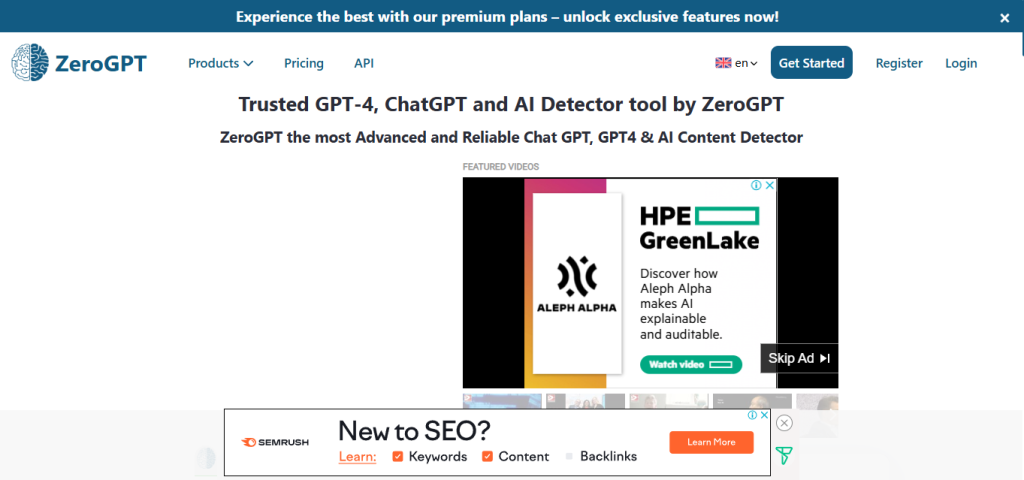
10. ZeroGPT: Focused on ChatGPT and GPT-3 Detection
Overview:
ZeroGPT specializes in detecting text generated by ChatGPT and other GPT-3 models. It’s a great choice for those concerned with the growing use of GPT models in content creation.
Key Features:
- Specifically detects ChatGPT and GPT-3 content
- Real-time analysis
- Available as a browser extension
Pros:
- Fast and accurate for detecting GPT-based content
- User-friendly
- Free version available
Cons:
- Limited scope (only GPT-based content)
- Free version has limited features
Use Cases:
Ideal for educators, content creators, and anyone who wants to spot GPT-generated content in various contexts.
Comparison Table of the 10 Best AI Detection Tools
| Tool | Key Features | Pros | Cons |
| GPTZero | Detects randomness in text, easy-to-use | Fast, accurate, free version available | Limited free features |
| CopyLeaks | Plagiarism and AI detection, multi-language support | Comprehensive, supports multiple file formats | Expensive for individuals, false positives |
| Turnitin | Extensive academic database, AI detection | Trusted globally, detailed reports | Expensive, misses casual AI writing |
| Writer.com | Bulk content upload, simple interface | Great for large-scale detection, affordable | Free version has limited features |
| Deepware Scanner | Deepfake detection, AI-based video analysis | Detects videos and images, cutting-edge algorithms | Slower with high-res videos |
| Content at Scale | Focus on SEO content, integrates with AI tools | Ideal for SEO, integrates well with other tools | Not ideal for academic writing |
| AI Text Classifier | Open-source, high detection accuracy | Free to use, simple interface | Struggles with short, stylized content |
| Hugging Face | Open-source, customizable models | Completely free, highly customizable | Requires technical knowledge |
| Botometer | Detects AI bots on social media platforms | Great for social media analysis | Limited to social media, not for deepfakes |
| ZeroGPT | Focus on GPT-3 content, real-time analysis | Free version, fast detection | Only detects GPT-generated content |

Closing Remarks: Choosing the Right AI Detection Tool for Your Needs
The landscape of AI detection is rapidly evolving, with new tools emerging to tackle different forms of AI-generated content. Whether you’re detecting text written by AI or identifying deepfake videos, there’s a detection tool for every need.
By using the 10 best AI detection tools outlined here, you can stay ahead of the curve and ensure that the content you encounter is authentic. As AI technology continues to grow, these tools will play an increasingly critical role in maintaining trust and integrity across digital platforms.
Interesting Reads: