

Sales analytics tools are a game-changer for businesses aiming to optimize performance, forecast trends, and maximize revenue. But with so many options available, choosing the right software can feel overwhelming. That’s where this guide comes in! We’ll explore the 10 best sales analytics software options, breaking down their features, strengths, and why they stand out in today’s competitive landscape.
Let’s dive in and help you find the perfect tool for your sales team.

Why Sales Analytics Tools Are Crucial for Success
Make Data-Driven Decisions
Gone are the days of guessing sales trends or performance metrics. With sales analytics software, businesses can analyze data to uncover patterns, identify bottlenecks, and predict future outcomes with accuracy.
For example, a sales analytics tool can show which product categories perform best during certain seasons or which sales reps consistently exceed their quotas. These insights lead to smarter strategies and better results.
Improve Sales Team Efficiency
Sales analytics tools empower teams by automating mundane tasks, tracking KPIs in real time, and offering actionable recommendations. Instead of manually combing through spreadsheets, your team can focus on closing deals and building relationships.
1. Salesforce Sales Cloud

Enterprise-Grade Sales Analytics
Salesforce Sales Cloud is a household name in the CRM world, offering comprehensive sales analytics capabilities. It provides detailed dashboards, predictive analytics, and integration with other Salesforce tools for seamless operations.
Key Features
- AI-powered analytics with Einstein AI.
- Customizable sales forecasting and reports.
Pros
- Highly scalable for businesses of all sizes.
- Extensive integration options.
Cons
- Steep learning curve for beginners.
2. HubSpot Sales Hub
User-Friendly Sales Insights
HubSpot Sales Hub combines CRM capabilities with advanced sales analytics tools. Its clean interface and easy-to-navigate dashboards make it a favorite for small to medium-sized businesses.
Key Features
- Pipeline management and deal tracking.
- Integration with marketing tools for full-funnel analytics.
Pros
- Intuitive interface.
- Free plan with essential features.
Cons
- Limited scalability for large enterprises.
3. Zoho Analytics
Budget-Friendly Analytics
Zoho Analytics offers an affordable yet robust solution for sales analytics. Its drag-and-drop interface makes creating custom reports a breeze, and its AI assistant provides data insights with natural language queries.
Key Features
- Pre-built sales dashboards.
- AI-driven insights with Zia Assistant.
Pros
- Affordable pricing plans.
- Easy integration with Zoho ecosystem.
Cons
- Limited features outside Zoho’s ecosystem.
4. Microsoft Power BI
Advanced Data Visualization
Microsoft Power BI is renowned for its data visualization capabilities, making it an excellent tool for sales analytics. It allows teams to create custom dashboards and reports, pulling data from multiple sources.
Key Features
- Powerful visualizations and interactive dashboards.
- Seamless integration with Microsoft products.
Pros
- Flexible and scalable for any business size.
- Affordable entry-level pricing.
Cons
- Requires technical expertise for advanced features.
5. Tableau
Industry-Leading Analytics
Tableau is perfect for businesses that need in-depth analytics and stunning visualizations. Its intuitive drag-and-drop interface makes complex data easier to understand, enabling better decision-making.
Key Features
- Real-time data blending.
- Customizable dashboards and KPIs.
Pros
- Excellent for large datasets.
- Compatible with multiple data sources.
Cons
- High pricing for premium plans.
6. Pipedrive Insights
Simplified Sales Reporting
Pipedrive Insights is built with sales teams in mind, offering tailored reporting and analytics to help teams hit their targets. Its focus on ease of use makes it a great choice for smaller teams.
Key Features
- Sales activity tracking.
- Customizable goal setting and reports.
Pros
- User-friendly interface.
- Affordable pricing tiers.
Cons
- Limited scalability for large organizations.
7. InsightSquared
AI-Driven Sales Performance
InsightSquared is designed for sales managers who want in-depth insights into team performance. Its AI-powered recommendations help businesses refine their strategies and improve outcomes.
Key Features
- Advanced pipeline management tools.
- AI-powered performance recommendations.
Pros
- Highly customizable.
- Excellent support for team management.
Cons
- Expensive for small businesses.
8. Domo
All-in-One Analytics Platform
Domo offers a complete analytics solution, including powerful sales insights. It integrates with hundreds of tools, making it ideal for businesses looking for a comprehensive platform.
Key Features
- Real-time data dashboards.
- Integration with over 1,000 apps.
Pros
- Scalable and flexible.
- Great for multi-departmental analytics.
Cons
- Complex setup process.
9. Clari
Predictive Sales Analytics
Clari specializes in revenue forecasting and pipeline insights. Its predictive analytics capabilities help businesses identify risks and opportunities within their sales process.
Key Features
- AI-driven forecasting.
- Pipeline health tracking.
Pros
- Focused on revenue optimization.
- Integrates well with CRMs.
Cons
- Best suited for larger teams.
10. Salesloft
Streamline Sales Engagement
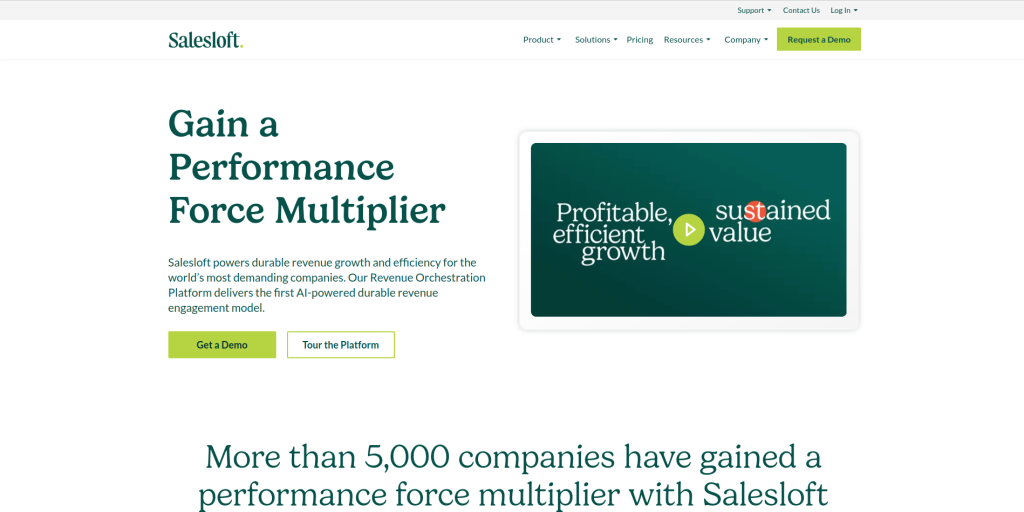
Salesloft focuses on sales engagement, offering analytics to track customer interactions and improve conversions. Its insights help teams refine their outreach strategies.
Key Features
- Call and email analytics.
- AI-driven recommendations for engagement.
Pros
- Perfect for outreach-heavy teams.
- Easy to integrate with existing tools.
Cons
- Limited focus on broader sales analytics.
Comparison Table: 10 Best Sales Analytics Software
| Software | Key Features | Pros | Cons |
| Salesforce Sales Cloud | AI analytics, forecasting | Scalable, many integrations | Steep learning curve |
| HubSpot Sales Hub | Pipeline tracking, marketing insights | User-friendly, free plan | Limited enterprise scalability |
| Zoho Analytics | AI-driven insights, dashboards | Affordable, easy setup | Ecosystem dependency |
| Microsoft Power BI | Advanced visualizations, integrations | Flexible, cost-effective | Needs expertise |
| Tableau | Real-time blending, custom dashboards | Great for large datasets | Expensive |
| Pipedrive Insights | Sales activity tracking, reporting | Affordable, intuitive | Limited for large businesses |
| InsightSquared | AI recommendations, pipeline tools | Customizable, team management | High cost |
| Domo | Real-time dashboards, 1,000+ integrations | Scalable, multi-departmental | Complex setup |
| Clari | Predictive forecasting, pipeline health | Revenue-focused, CRM integration | Best for large teams |
| Salesloft | Call/email analytics, engagement insights | Great for outreach, easy integration | Limited broader analytics focus |
How to Choose the Right Sales Analytics Software
Consider Your Business Size
Smaller teams might find tools like HubSpot Sales Hub or Pipedrive ideal due to their simplicity and affordability. Larger organizations should explore options like Salesforce Sales Cloud or Clari for their scalability and advanced features.
Prioritize Integration and Usability
Choose a tool that integrates well with your existing stack and offers an intuitive interface. A user-friendly platform ensures quick adoption and better results.

Wrapping Up: Find Your Ideal Sales Analytics Tool
Investing in one of the 10 best sales analytics software can transform how your business operates. By leveraging data-driven insights, your team can make smarter decisions, boost efficiency, and ultimately, close more deals.
From industry giants like Salesforce to budget-friendly options like Zoho Analytics, there’s a tool tailored for every need. So, don’t wait - take your sales strategy to the next level today!