


Running Multiple WooCommerce Stores: Real Lessons From Testing 8 Multistore Plugins
Running two WooCommerce stores seems manageable at first until you must synchronize products, orders, inventory, customers, and pricing across multiple sites without errors. I learned this lesson painfully when maintaining a main retail shop and a wholesale version. Updating stock manually led to overselling, mismatched variants, and frustrated customers.
To fix that, I went searching for WooCommerce Multistore Plugins that promised centralized control. I wanted tools that helped beginners, not giant enterprise platforms disguised in plugin clothing. Then, I decided to test eight plugins hands-on across live and staging environments. I synced catalogs, orders, SKU updates, and variations. I connected subdomains, tested WordPress multisite configurations, and intentionally forced conflicts to see whether plugins handled real-world stress, not just brochure promises.
Below, I share my honest results. Some plugins were effortless; others required configuration gymnastics. I hope that my brutal testing saves small business owners from wasting money or hours troubleshooting.
Why Multistore Management Matters
Managing multiple WooCommerce stores sounds like a growth milestone. But when inventory syncing or product duplication becomes manual, scaling reverses into chaos. The tools below automate key multi-store workflows for small business owners. Benefits include:
- centralized product administration
- unified inventory management
- easier expansion into new markets
- separate stores for different audiences or pricing tiers
When reviewing WooCommerce Multistore Plugins, I learned that seamless synchronization makes all the difference. A missed stock reduction can cause customer disappointment. A botched variation sync can break critical listings. When a plugin works smoothly, the relief is immediate.
How I Tested the Plugins
I standardized testing across three staging stores and two small live stores to simulate realistic workflows. I tested:
- Cross-store product sync
- Inventory Subtraction Sync Accuracy
- variation and grouped product syncing
- multisite compatibility
- SKU mapping behavior
- order syncing triggers
- sync speed under multiple updates
- integration with common plugins
What mattered most
- ease of setup for non-technical users
- predictable automatic syncing
- minimal resource usage
- compatibility with caching and builder themes
Some WooCommerce Multistore Plugins looked amazing on paper but caused failures during test purchases. I reveal these issues where relevant below.
The Top 8 WooCommerce Multistore Plugins I Tested
As requested, WooCommerce plugins and YITH appear at the top of the list. Each section includes key features, pros, and cons based on my real testing experience.
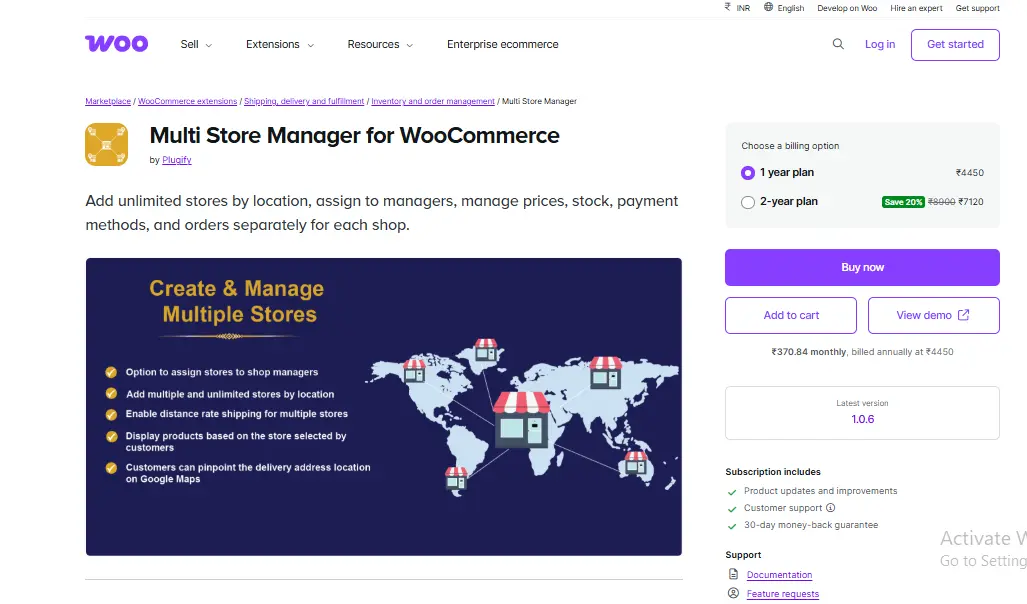
1. WooCommerce Multistore (Official Plugin)
I started with the official WooCommerce Multistore plugin because I expected a seamless experience. The installation was straightforward. Connecting stores was clearly guided, and synchronization settings appeared in familiar WooCommerce admin areas.
However, syncing took noticeable time depending on the catalog size. Larger product lists strained performance. Even so, for beginners who want minimal risk, this plugin delivered predictable reliability and remains one of the safer WooCommerce Multistore Plugins on the market.
Key Features
- product syncing across stores
- stock synchronization
- order consistency across sites
- multisite compatibility
Pros
- native WooCommerce interface
- stable syncing performance
- no steep learning curve
Cons
- not ideal for very large catalogs
- feature set is limited compared to premium alternatives
2. YITH WooCommerce Multi Vendor and Multistore
YITH plugins are known for deep features and intuitive design. This multistore plugin lived up to that reputation. It mirrored listings across stores and supported vendor-specific pricing rules without breaking templates.
The vendor interface was exceptionally clear, but some features leaned toward marketplace architecture rather than pure multi-store operation. Still, for beginners selling across regions or audiences, this plugin remains a strong contender among WooCommerce Multistore Plugins.

Key Features
- vendor-driven store controls
- commission and shipping settings
- product synchronization tools
Pros
- visually intuitive administration
- scalable for future expansion
Cons
- higher resource usage
- configuration depth may overwhelm beginners
3. WP Global Cart for WooCommerce
I used this plugin to unify checkout across multiple stores. Shoppers can add products from different sites and complete checkout once. The experience felt smooth and cohesive, especially for browsing across sub-brands.
However, the setup required careful cookie and domain configuration. Once complete, performance remained consistent. If your strategy requires a unified cart, this plugin deserves consideration among the top WooCommerce Multistore Plugins.
Key Features
- shared cart across domains
- synchronized checkout session
- cross-domain user continuity
Pros
- friction-free cross-store purchasing
- strong user authentication logic
Cons
- confusing initial configuration
- requires solid hosting setup
4. WooMultistore
This plugin delivered product, SKU, price, and inventory synchronization with impressive stability, even during heavy test updates. It worked cleanly with WordPress multisite and did not require advanced technical knowledge.
The standout feature was selective synchronization. Instead of syncing the entire catalog, I could choose specific products. This prevented accidental cross-store exposure, something many WooCommerce Multistore Plugins overlook.
Key Features
- selective product and variation sync
- inventory adjustment tracking
- automated order syncing
Pros
- lightweight codebase
- highly configurable syncing rules
Cons
- plain interface design
- documentation slightly behind current features
5. MultistoreX
I tested this plugin after hearing strong feedback about its user experience. Syncing workflows was extremely transparent, with the system guiding configuration steps clearly.
Tax syncing was remarkably accurate, which many multistore setups struggle with. For beginners who want clarity without complexity, this ranked high among WooCommerce Multistore Plugins.
Key Features
- real-time inventory synchronization
- multi-store pricing tiers
- centralized admin panel
Pros
- excellent onboarding experience
- good documentation and support
Cons
- limited automation for advanced use cases
- missing marketplace-style features
6. Premmerce Multisite WooCommerce
This plugin targets performance. Even under pressure, syncing remained quick and accurate. Bulk syncing operations ran smoothly without heavy strain on hosting.
The downside is configuration complexity. Users unfamiliar with multisite environments may struggle at first. Still, once configured, it became one of the fastest WooCommerce Multistore Plugins I tested.
Key Features
- product and stock synchronization
- bulk product operations
- performance-optimized for multisite setups
Pros
- excellent performance under load
- robust multisite compatibility
Cons
- not beginner friendly
- dated interface styling
7. Stock Sync for WooCommerce Multistore
Inventory accuracy was my main focus here. This plugin specializes in stock synchronization and performed nearly flawlessly. Inventory updates triggered instantly with every test order I placed across stores.
However, because it only handles inventory, store owners must combine it with other WooCommerce Multistore Plugins to sync product data and pricing.
Key Features
- fast and accurate stock syncing
- minimal server load
- order status triggered sync
Pros
- highly reliable inventory management
- lightweight and efficient
Cons
- not a full multistore solution
- no pricing or product sync
8. Multisite Product Sync
This plugin focuses on product synchronization within a multisite environment. For simple product cloning across stores, it performed exactly as expected. Variation syncing lagged slightly but remained consistent.
For beginners wanting a minimal, affordable solution, this plugin keeps workflows simple.
Key Features
- batch product syncing
- variation syncing
- multisite only compatibility
Pros
- easy control panel
- reliable batch operations
Cons
- no inventory or price sync
- limited beyond basic cloning tasks
Performance Surprises and Lessons Learned
Not all multistore plugins solve the same problem
During testing, I learned that WooCommerce Multistore Plugins fall into distinct categories such as catalog syncing, inventory syncing, unified checkout, vendor management, and marketplace expansion. Forcing a plugin to do work outside its intended purpose caused unstable behavior. Beginners should identify requirements clearly before choosing a tool.
Sync accuracy matters more than sync speed
A fast sync that occasionally mismatches SKU quantities creates a major risk. Accuracy is critical for avoiding overselling and maintaining customer trust. I preferred plugins that were slower but consistently correct.
Hosting influences results
Plugins that run continuous background synchronizations use more server resources. Performance varied significantly across hosting environments. Store owners should evaluate hosting capacity before deploying WooCommerce Multistore Plugins.
Additional Considerations Before You Choose a Plugin
Before installing multistore plugins, map your workflow and business structure. Doing so prevents unnecessary troubleshooting later, especially as your operations scale.
- How many stores exist today, and how many are planned?
- Will catalogs overlap across stores?
- Do shipping and tax rules differ by store?
- Will customer accounts be shared or isolated?
- How much order volume must sync engines handle?
Also, evaluate supporting technical factors:
- Compatibility with caching layers and object caching
- Query load on the database during sync operations
- consistent SKU structure across stores
These considerations help determine whether to use an all-in-one WooCommerce Multistore Plugin or specialized syncing plugins that integrate cleanly.
Comparison Table
| Plugin Name | Ease of Use | Key Strength | Best For | Performance | Sync Depth |
|---|---|---|---|---|---|
| WooCommerce Multistore | Easy | Native sync reliability | Beginners | Strong | Medium |
| YITH Multi Vendor / Multi Store | Medium | Vendor control | Marketplace-style stores | Medium | Medium |
| WP Global Cart | Medium | Unified checkout | Multisite checkout | Strong | Medium |
| WooMultistore | Medium | Selective product syncing | Large catalogs | Strong | High |
| MultistoreX | Easy | Beginner-friendly UI | First-time multistores | Strong | Medium |
| Premmerce Multisite | Medium–Hard | Speed + performance | High-traffic stores | Excellent | Medium |
| Stock Sync for WooCommerce | Very Easy | Real-time inventory sync | Shared stock systems | Excellent | Low |
| Multisite Product Sync | Easy | Basic batch syncing | Simple multisites | Good | Low |
Final Thoughts
After installing and stress-testing eight WooCommerce Multistore Plugins across real and staging environments, the biggest lesson was this: multistore automation is complex beneath the surface. The strongest plugins sync quietly and predictably, while weaker tools introduce inconsistencies that go unnoticed until customer impact occurs.
Choose plugins intentionally based on your architecture. If you require unified checkout, prioritize cart sync. If you only need inventory consistency, avoid full-stack syncing engines that increase resource load. Begin small, validate workflows in staging, and scale functionality over time.
With the right sync logic and operational planning, multistore expansion becomes sustainable rather than chaotic. The correct WooCommerce Multistore Plugin stack helps prevent overselling, streamline catalog administration, and support revenue growth across multiple storefronts.
Interesting Reads:
Building an online Cooking Community with Reign WordPress Theme
Building an online Fitness Community with Reign WordPress Theme
AppSumo Plus Review: Supercharge Your App Purchases And Boost Productivity