

Online communities are more important than ever. Businesses, creators, and organizations are realizing that building a loyal, engaged audience requires more than social media channels or email lists. Members now expect interactive, branded spaces where they can connect, share ideas, and access exclusive content. Community platforms have therefore become essential tools for driving engagement, loyalty, and revenue.
Among these platforms, Vanilla by Higher Logic has emerged as a leading choice. Known for its flexibility and enterprise-grade features, Vanilla caters to organizations looking to build structured, scalable online communities. From discussion forums to Q&A hubs, events, and knowledge-sharing spaces, Vanilla provides tools that go beyond simple social networking. Its platform focuses on both engagement and insight, giving hosts actionable analytics to better understand their members.
The purpose of this article is to provide a comprehensive review of Vanilla by Higher Logic. We will explore its core features, pricing models, and usability, while also comparing it with alternative platforms like Discourse, Circle, and Mighty Networks. By the end, readers will have a clear understanding of whether Vanilla is the right fit for their community-building goals in 2025 and how it stacks up against other popular options in the market.

What Is Vanilla by Higher Logic?
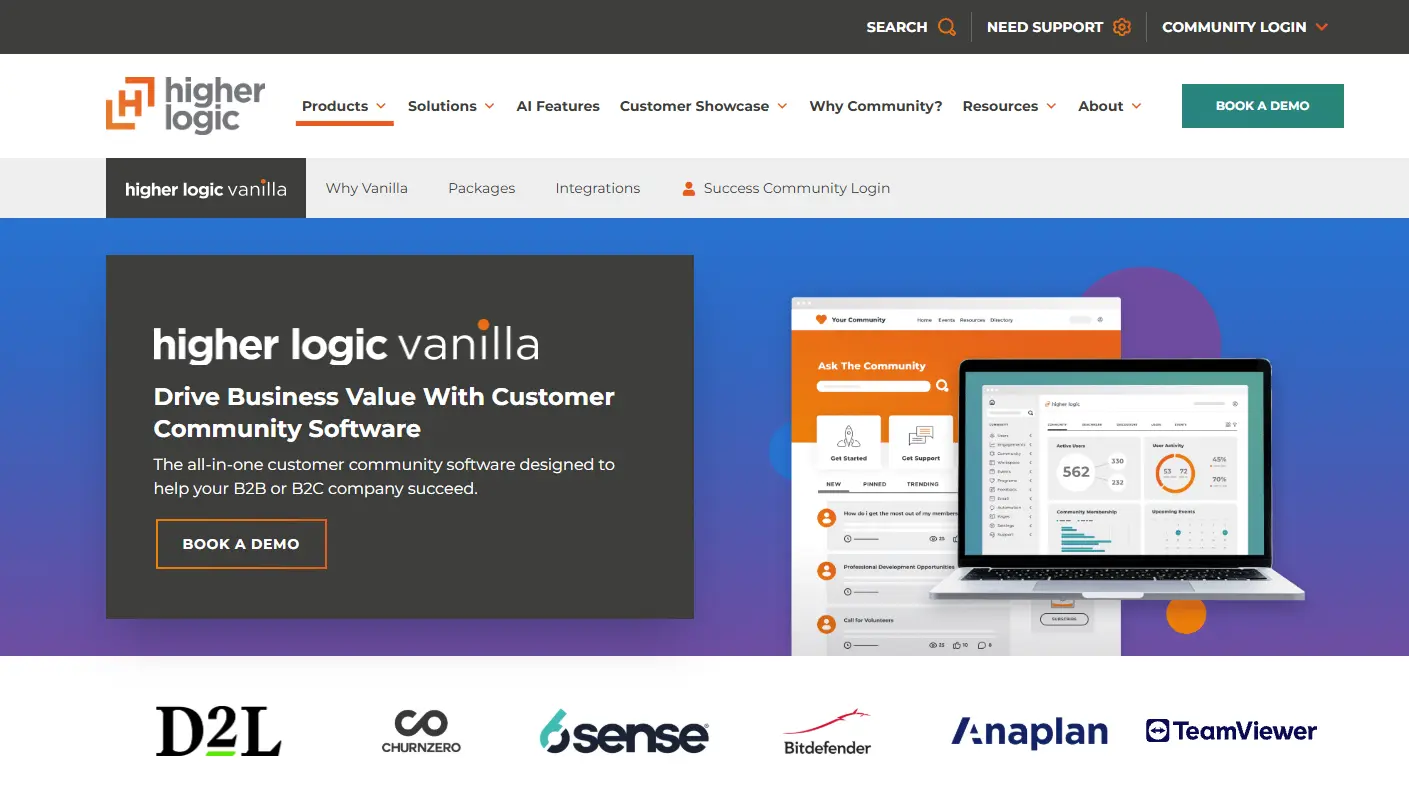
Vanilla by Higher Logic is a robust online community platform designed to help organizations connect, engage, and retain their audiences. Unlike simple forums or generic social networks, Vanilla provides a professional-grade environment for creating structured discussions, peer-to-peer support, knowledge bases, and member engagement programs. Its primary purpose is to empower organizations to build loyal communities that drive business value, whether through customer support, brand advocacy, learning, or networking.
The platform excels in scalable, customizable community experiences, combining features like discussion boards, Q&A hubs, gamification, and analytics in a single ecosystem. Organizations can leverage Vanilla to create spaces that not only foster meaningful conversations but also track engagement, reward active participation, and gain actionable insights about their members. This makes it ideal for companies looking to move beyond transactional interactions and cultivate long-term relationships with their audience.
Target Audience
Vanilla’s core users tend to be enterprises, mid-sized businesses, and professional associations. Large companies often use the platform to centralize customer support, host product-focused communities, or maintain member engagement in professional networks. Mid-sized organizations leverage Vanilla to strengthen brand loyalty, provide knowledge-sharing hubs, and support online events or webinars. Educational institutions and non-profits also utilize the platform to foster alumni networks, professional learning communities, and volunteer engagement programs.
The platform is less geared toward casual hobbyist communities and more suitable for organizations that need structured, scalable, and professionally managed online spaces. Its enterprise-grade features ensure that administrators can maintain security, moderation, and advanced analytics, which are critical for professional or corporate audiences.
Core Offerings
Vanilla by Higher Logic provides a comprehensive suite of features:
- Discussion Forums & Q&A Spaces: Structured areas for members to ask questions, share ideas, and engage in focused discussions.
- Gamification & Rewards: Points, badges, and recognition systems to incentivize participation and foster engagement.
- Custom Branding & Design: Flexible design options to match the organization’s brand and create a professional online presence.
- Analytics & Insights: Detailed metrics on member activity, engagement trends, and content performance to inform strategy.
- Integration Capabilities: Connections with CRM systems, marketing automation tools, and third-party applications for seamless workflows.
In essence, Vanilla by Higher Logic is more than a discussion forum—it’s a comprehensive platform for businesses and organizations to build, measure, and grow meaningful communities that support long-term goals.
Key Features of Vanilla by Higher Logic
Vanilla by Higher Logic has established itself as a leading platform for enterprise-grade community engagement. Its wide array of features enables organizations to create vibrant, interactive, and measurable online communities. From structured discussions to gamification and analytics, the platform is designed to enhance member participation while providing administrators with actionable insights.
Community Engagement
At its core, Vanilla offers robust forums and Q&A spaces. Discussion boards are highly flexible, allowing members to post questions, share insights, and collaborate on solutions. The Q&A functionality ensures that knowledge is easily searchable, helping users find relevant answers quickly. Additionally, Vanilla includes ideation tools that let organizations collect and prioritize ideas from community members, making it a powerful tool for innovation and product feedback.
Unlike casual forums, Vanilla emphasizes structured, professional interactions, giving organizations control over content flow and moderation. Members can follow threads, receive notifications, and participate in focused discussions, enhancing overall engagement and long-term retention.
Customization
Brand identity is critical for professional communities, and Vanilla delivers extensive customization options. Organizations can tailor the platform’s look and feel to match their branding, including themes, color schemes, logos, and layout designs. This ensures the community feels like an integrated part of the organization rather than a generic forum.
Beyond aesthetics, administrators can configure roles and permissions to control who sees or interacts with specific content. This flexibility supports private spaces, internal teams, or exclusive member tiers, making Vanilla adaptable to a wide range of organizational needs.
Analytics
Vanilla’s analytics and reporting features provide actionable insights to optimize engagement strategies. Administrators can track metrics such as active users, top contributors, post performance, and thread activity. Dashboards offer a clear overview of community health, helping leaders identify trends, measure ROI, and make data-driven decisions.
Advanced reporting tools allow organizations to monitor engagement at granular levels, which is particularly valuable for customer support communities or professional associations seeking to maximize member participation. These insights help refine content strategies, identify influential members, and drive more meaningful interactions.
Integration
Vanilla integrates seamlessly with key enterprise tools such as Salesforce, WordPress, and Zendesk. These integrations allow organizations to sync member data, automate workflows, and enhance community functionality. For example, linking with Salesforce enables community activity to inform CRM records, while integration with Zendesk can turn forum discussions into support tickets.
Such connectivity ensures that Vanilla works as a central hub within an organization’s existing tech stack, rather than as a standalone tool. This integration capability is crucial for enterprises that require efficient, unified workflows across marketing, sales, and support teams.
Gamification
To drive engagement, Vanilla includes gamification features such as badges, leaderboards, and recognition systems. Members earn points for participation, contributions, and engagement, which encourages continued involvement and strengthens loyalty.
Gamification is not just about fun—it provides behavioral incentives that can significantly increase activity levels. Recognizing top contributors motivates members to participate more actively, while leaderboards create healthy competition and a sense of community pride. These features make Vanilla particularly effective for long-term engagement in professional, learning, or product-focused communities.
Pricing Structure of Vanilla by Higher Logic
Vanilla by Higher Logic is a premium community platform, and its pricing reflects its enterprise-grade features and robust capabilities. Unlike free or low-cost community tools, Vanilla is designed for organizations that require scalability, customization, and comprehensive support.
Starting Price
The platform’s base price begins at $24,000 per year, which positions it firmly in the enterprise market. This starting price covers access to core community features, including discussion forums, Q&A spaces, analytics, and basic customization. While this may seem steep compared to casual platforms like Discord or Facebook Groups, the investment provides a professional-grade environment with tools designed for engagement, retention, and monetization at scale.
Pricing Tiers
Vanilla offers multiple pricing tiers tailored to different organizational needs:
- Essentials Plan – Designed for small to mid-sized businesses or professional associations. Includes basic community features, standard branding, and fundamental analytics. Suitable for organizations just starting with structured community engagement.
- Corporate Plan – Ideal for larger organizations seeking enhanced customization, advanced analytics, and workflow integrations. This tier supports more members and provides additional features such as gamification, single sign-on (SSO), and priority support.
- Enterprise Plan – Tailored for very large organizations or multinational enterprises. Offers full customization, branded mobile apps, API access, and dedicated account management. This plan is designed for organizations with complex workflows, requiring enterprise-level scalability and security.
Add-Ons
Vanilla also offers optional add-ons to enhance functionality, which may include:
- Branded mobile apps – additional cost depending on deployment.
- Premium support packages – faster response times and dedicated support.
- Advanced integration services – custom integrations with CRM, marketing, or support systems.
- Gamification modules – enhanced points, badges, and leaderboard systems.
These add-ons allow organizations to tailor the platform to their exact needs while ensuring that critical features are included.
Trial and Support
For organizations evaluating Vanilla, a free trial or demo is typically available, allowing administrators to test core features before committing. Vanilla also provides comprehensive support options, including documentation, tutorials, and direct access to customer success teams, ensuring that onboarding and ongoing management are smooth and efficient.
In summary, Vanilla by Higher Logic offers a high-value, enterprise-focused pricing structure. While the base investment is significant, the platform delivers a professional, scalable, and fully supported environment suitable for organizations that prioritize community engagement, customer retention, and measurable impact.
Pros and Cons of Vanilla by Higher Logic
Vanilla by Higher Logic has earned a reputation as a robust and enterprise-ready community platform, but like any tool, it comes with both strengths and limitations. Understanding its pros and cons is essential for organizations deciding whether it’s the right fit for their needs.
Pros
1. Comprehensive Feature Set
Vanilla offers an extensive array of tools that go beyond simple forums or chat-based platforms. Organizations can leverage discussion boards, Q&A spaces, ideation tools, gamification, analytics, and integrations all in one ecosystem. This makes it a true all-in-one solution for professional community management, allowing teams to engage members, gather insights, and drive meaningful interactions without juggling multiple platforms.
2. Strong Customization Capabilities
Branding and flexibility are major advantages of Vanilla. The platform allows for custom themes, logos, color schemes, and layout options, enabling organizations to create communities that align with their identity. Role-based permissions and private spaces further enhance customization, giving administrators control over visibility, access, and engagement strategies. These capabilities are especially valuable for enterprises that want their online community to reflect a professional, branded experience.
3. Excellent Customer Support
Vanilla’s customer support is frequently praised. From onboarding assistance to ongoing technical help, organizations receive guidance to maximize platform usage. Documentation, tutorials, and dedicated account managers ensure that teams can implement features effectively and troubleshoot issues quickly, which is crucial for maintaining active, engaged communities.
Cons
1. High Starting Price
With a base price of $24,000 per year, Vanilla is clearly targeted at enterprises and mid-sized organizations. For small businesses or startups, this cost may be prohibitive. While the features justify the price for organizations with complex community needs, it is far more expensive than casual platforms like Facebook Groups, Discord, or even Circle.
2. May Be Complex for Small Businesses
Due to its extensive features and enterprise focus, Vanilla can feel overwhelming for smaller teams. Organizations without dedicated community managers may struggle to implement all the tools effectively. Unlike simpler platforms, which are often plug-and-play, Vanilla requires thoughtful planning and strategy to ensure success.
3. Learning Curve for New Users
While the interface is intuitive, mastering Vanilla’s full suite of capabilities can take time. Features such as gamification, advanced analytics, integrations, and role-based permissions require effort to set up and optimize. Organizations must invest in training or rely on support resources to fully leverage the platform, which may slow initial adoption.
Vanilla by Higher Logic in Action
Case Studies
Several organizations have adopted Vanilla by Higher Logic to strengthen customer engagement and streamline support. For instance, Dell Technologies leverages Vanilla to host a customer support community where users can troubleshoot issues, share knowledge, and connect directly with experts. By centralizing this interaction, Dell reduced support costs while improving customer satisfaction.
Similarly, Chartered Professional Accountants (CPA) Canada uses Vanilla to maintain a professional learning community for its members. Through discussion forums, ideation spaces, and gamified incentives, CPA Canada provides an environment where professionals collaborate, share insights, and stay updated on industry best practices.
User Testimonials
Feedback from users highlights the platform’s powerful mix of customization and ease of use. One community manager shared: “Vanilla gave us the flexibility to create a branded space that feels like an extension of our company, not just another forum. The analytics tools have been game-changers in understanding what our members really value.”
Another testimonial from a mid-sized SaaS company noted: “The gamification features helped us significantly increase member activity. Our leaderboard and reward badges turned passive readers into active contributors.”
Real-World Applications
Vanilla shines in real-world applications by bridging engagement with measurable results. Companies use it to:
- Enhance customer support by reducing repetitive inquiries through searchable Q&A forums.
- Foster innovation by collecting user-generated ideas via ideation tools.
- Strengthen brand loyalty with branded, professional community spaces.
- Encourage knowledge sharing among professionals through structured discussions.
By combining these applications, Vanilla not only improves engagement but also delivers tangible business outcomes like reduced support costs, higher retention rates, and stronger brand advocacy.
Alternatives to Vanilla by Higher Logic
Choosing the right community platform often means comparing several strong contenders. Below are five popular alternatives to Vanilla by Higher Logic—each with distinct strengths, target audiences, and trade-offs.
Bettermode: Modular UX and App-Store Extensions
What it is: Bettermode focuses on a modular, widget-based architecture that lets teams assemble community experiences like building blocks. Its modern UI, block editor, and extensive app ecosystem (HubSpot, Intercom, Zendesk, GA, etc.) make it attractive to product-led companies and SaaS teams.
Strengths: Standout customization at the page/component level; flexible theming; strong embeddability to bring community into your product or marketing site; solid knowledge base and Q&A patterns.
Weaknesses: While it scales, governance and complex role/permission models can feel lighter than enterprise platforms like Vanilla or Hivebrite. Advanced analytics are improving, but may require external BI for deep reporting.
Pricing: Typically mid-market with plan tiers; more cost-efficient than many enterprise suites, especially if you don’t need heavy compliance or white-glove services.
Best for: SaaS and product teams wanting a visually customizable, embeddable community that integrates tightly with marketing and support stacks.

Hivebrite: Enterprise Associations and Alumni Powerhouse
What it is: Hivebrite is known for powering associations, alumni networks, and member organizations with complex hierarchy, chapters, and directory needs.
Strengths: Rich member directory and segmentation; event management (including paid events); job boards; granular access control; strong admin tooling for large, structured communities.
Weaknesses: The interface is capable but can feel heavy; content discovery may be less “social” and more portal-like; customizations often require careful configuration.
Pricing: Squarely enterprise—expect higher annual commitments with implementation support.
Best for: Associations, universities, nonprofits, and global networks needing directories, dues/membership workflows, and multi-chapter governance.

Mighty Networks: Community + Courses + Monetization Under One Roof
What it is: A creator-economy favorite that merges community, online courses, events, and paid memberships in a single experience—with optional branded mobile apps.
Strengths: Fast path to monetization; excellent course + community pairing; intuitive mobile app; clean design and straightforward setup for small to mid-sized teams.
Weaknesses: Not built for complex enterprise governance; advanced integrations, automation, and analytics are lighter than enterprise forums; very large communities may hit process limits.
Pricing: Tiered SaaS with clear upgrade paths; generally more affordable than enterprise suites but a step up from free tools.
Best for: Creators, coaches, boutique education brands, and SMBs wanting a business-in-a-box—community plus revenue streams.
Discourse: Open-Source Flexibility vs. Enterprise Convenience
What it is: Discourse is a widely adopted open-source discussion platform known for clean threading, powerful moderation, and an active plugin ecosystem.
Strengths: Full control of self-hosted; strong SEO; accessible UI/UX; thriving open-source community; can be highly performant and secure when configured well.
Weaknesses: Self-hosting demands DevOps resources (updates, backups, scaling, security). Even with Discourse’s paid hosting, you’ll handle more technical decisions than on fully managed enterprise suites. Enterprise features like deep CRM/CSM integrations or detailed success services may require extra work.
Pricing: Free to self-host aside from infra and labor; paid hosting/enterprise support available at a predictable monthly/annual rate.
Best for: Tech-savvy teams and developer communities seeking cost control and extensibility, comfortable with a bit of engineering ownership.
Influitive: Customer Advocacy and Reference Generation
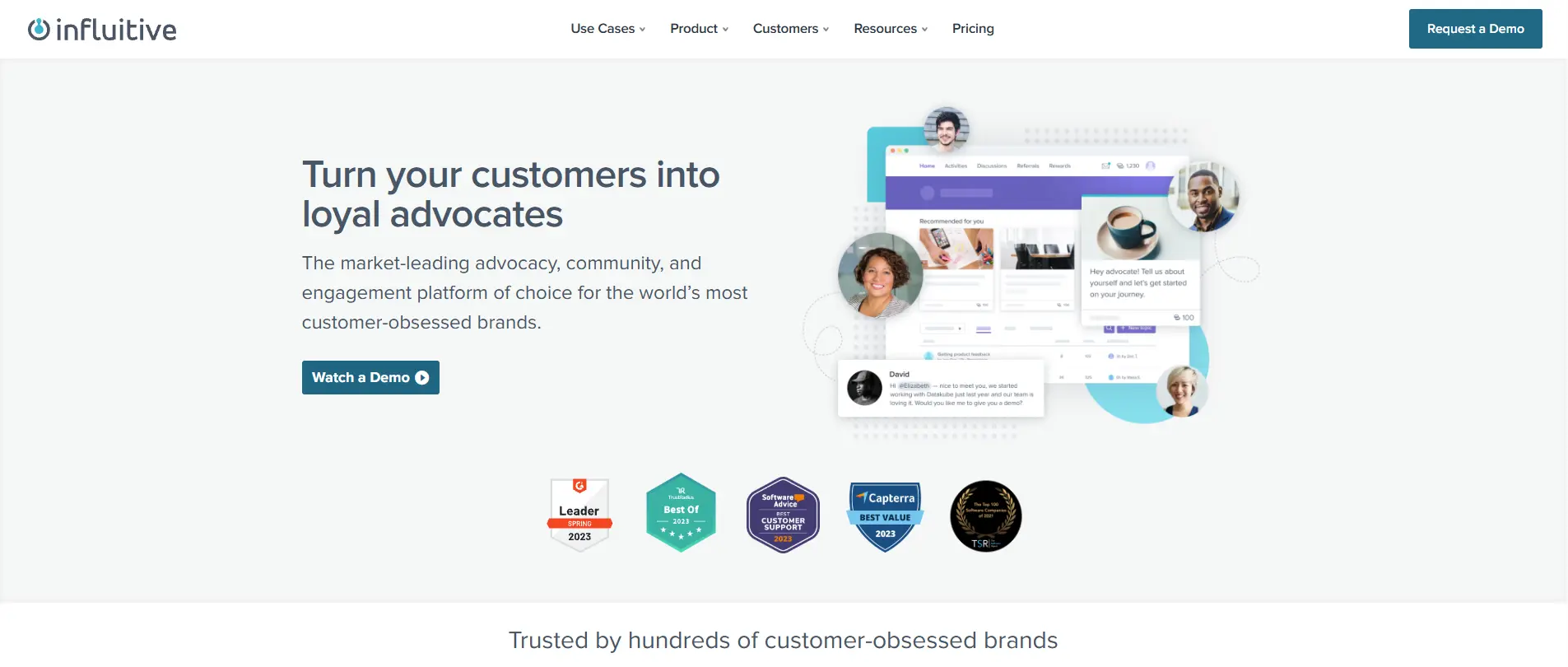
What it is: Influitive focuses on customer advocacy—turning customers into champions via challenges, referrals, reviews, references, and rewards. Community is integrated but purpose-built around advocacy outcomes.
Strengths: Gamified advocate hubs; structured campaigns to drive reviews, referrals, and case studies; robust ROI tracking tied to pipeline and revenue influence.
Weaknesses: Less of a general-purpose forum; if you need broad discussions, knowledge base depth, or ideation at scale, you may need a complementary tool. Requires program management to keep advocacy campaigns fresh.
Pricing: Enterprise-oriented with services to launch and optimize advocacy programs.
Best for: B2B SaaS and enterprise marketing teams prioritizing reviews, referrals, and customer-led growth over open-ended discussion.
How to Choose
- Pick Bettermode if you want modern, embeddable pages and marketing/product integrations at a mid-market price.
- Choose Hivebrite for associations/alumni where directories, dues, and chapter structures are core.
- Choose Mighty Networks for creator/education monetization with courses and memberships baked in.
- Choose Discourse if you need open-source flexibility and have technical resources (or opt for their hosted plans).
- Choose Influitive when your primary KPI is customer advocacy (reviews, references, referrals) rather than broad discussion.
If you need enterprise community plus deep governance and analytics, Vanilla remains a strong contender. But if your goals skew toward creator monetization, open-source control, alumni/association structures, or customer advocacy, one of these alternatives may be a better strategic fit.
How to Choose the Right Community Platform
With so many community platforms available in 2025, choosing the right one can feel overwhelming. Each tool promises engagement, retention, and growth, but the best choice depends on your business size, goals, and resources. By carefully evaluating your needs, comparing features, and weighing long-term value, you can select a platform that supports your community both today and in the future.
Assessing Needs
Start by identifying your organization’s primary objectives. Are you building a customer support hub, a professional learning network, or a monetized creator community? For example, enterprises may prioritize advanced analytics, SSO, and integrations, while independent creators may focus on course delivery and memberships. Defining your community’s purpose ensures you select a platform that aligns with measurable outcomes rather than shiny but unnecessary features.
Feature Comparison
Once goals are clear, map them to platform offerings. If knowledge sharing and Q&A are essential, platforms like Vanilla or Discourse may fit. If monetization is the focus, Mighty Networks offers built-in payments and course tools. Associations may prefer Hivebrite for its directory and chapter management, while advocacy-driven companies may lean toward Influitive. By matching features to use cases, you avoid overpaying for tools you’ll never use—or choosing a platform that can’t scale with your goals.
Budget Considerations
Price plays a critical role. Enterprise-grade solutions like Vanilla and Hivebrite start at higher annual commitments, justified by robust features, compliance, and dedicated support. On the other hand, mid-market tools like Bettermode or subscription-based platforms like Mighty Networks provide more affordable options without heavy overhead. Consider not just the upfront cost but also the ROI potential—a higher-priced tool may reduce support costs, drive revenue, or save time in the long run.
Scalability
Finally, think about where your community will be in three to five years. Will the platform accommodate membership growth, integrations, or advanced governance needs? Solutions like Vanilla and Hivebrite are built for large-scale, long-term use, while others like Mighty Networks excel at smaller, monetized communities but may face limitations as the user base expands. Choosing a scalable platform prevents costly migrations later.

Closing Remarks
Vanilla by Higher Logic has established itself as a leading enterprise-grade community platform in 2025, offering a powerful suite of tools designed to foster engagement, reduce support costs, and strengthen customer relationships. Throughout this review, we explored its core features such as forums, ideation tools, gamification, and analytics; its robust customization options that allow for branded, professional experiences; and its integrations with tools like Salesforce and Zendesk. We also examined its pricing model, pros and cons, and real-world use cases that highlight its ability to deliver measurable results for organizations.
The platform is not without its challenges. Its high starting price of $24,000 per year and comprehensive feature set make it better suited to enterprises and mid-sized businesses than to startups or small teams. Additionally, new users may face a learning curve, particularly when leveraging advanced analytics or integrations. Yet, for organizations that have the resources and long-term vision, Vanilla offers a comprehensive, scalable solution that few alternatives can match.
So, who should use Vanilla? Enterprises that need structured, branded, and secure community spaces will gain the most value. It is also ideal for professional associations, B2B companies, and organizations that prioritize measurable engagement and insights. On the other hand, smaller creators or businesses looking for a simple, low-cost solution may be better served by alternatives like Mighty Networks or Bettermode.
In the end, the decision comes down to aligning your specific needs and goals with the strengths of the platform. Vanilla by Higher Logic is a powerful tool, but only when applied to the right context. Take time to assess your budget, objectives, and scalability requirements before committing. With the right match, Vanilla can become a cornerstone of your digital community strategy in 2025 and beyond.
Interesting Reads:
The Best Video Editing Software 2025
10 Best IG Follower Export Tools to Track and Analyze Instagram Data in 2025