

Creating a thriving online community requires more than just a few discussion threads and social media posts. Whether you’re an educator, brand, creator, or entrepreneur, finding the right platforms to build an online community is essential to fostering engagement, trust, and meaningful interaction. With so many options available, the key is to align your goals with the platform’s features, scalability, and user experience.

What are Online Community Platforms?
Online community platforms are digital spaces that enable people with shared interests or goals to connect, interact, and collaborate. These platforms offer various features like forums, chat rooms, and content-sharing tools, allowing members to engage in discussions, share resources, and build relationships. Unlike broader social media networks, online community platforms focus on specific topics or groups, fostering more meaningful and targeted interactions.
For businesses and educational institutions, these platforms are invaluable for customer support, peer-to-peer learning, and building brand loyalty. By providing a dedicated space for engagement, they help organizations create a sense of community, encourage collaboration, and drive long-term growth. Whether for professional networking, education, or socializing, online community platforms are essential for creating and sustaining vibrant digital communities.
Why an Online Community Matters
An online community fosters a sense of belonging that can’t be replicated by one-way communication. It gives members a platform to connect, exchange knowledge, share experiences, and grow together. Whether you’re building a customer base, supporting a cause, or scaling an education business, a community increases engagement and retention like no other marketing tool.
Beyond just connection, online communities drive long-term value. They allow brands and creators to build trust and loyalty, collect real-time feedback, and co-create value with their audience. Communities turn one-time interactions into relationships and provide the kind of social proof and advocacy that’s hard to buy but easy to nurture with the right platform.
Also Read: Why Are We Drawn to Online Communities?
Picking the Right Community Space: What to Consider
Choosing a platform is like choosing the venue for an event. You need to think about more than just looks—functionality, size, scalability, and user-friendliness all play major roles. Before committing to one of the many platforms to build an online community, take time to consider these key aspects:
- Audience Needs: Who are your members? Are they students, customers, fans, or professionals?
- Ease of Use: Does the platform allow intuitive setup and navigation, both for admins and users?
- Customization: Can you brand the space to reflect your identity and goals?
- Community Features: Look for forums, private groups, direct messaging, gamification, and integrations.
- Scalability: Will it grow with your community or limit you in the long run?
- Monetization Options: If needed, can you charge for memberships, host events, or offer digital products?
- Security and Moderation: Does the platform offer tools to keep your space safe and respectful?
With these criteria in mind, let’s dive into the best platforms available today.
20 Best Community Platforms Ranked
Building an online community is essential for fostering engagement, sharing knowledge, and creating a sense of belonging among members. Whether you’re looking to create a niche forum, a professional network, or a social platform, choosing the right platform is crucial. Here’s a look at the best platforms for building an online community, including their features and pricing.
1. BuddyX
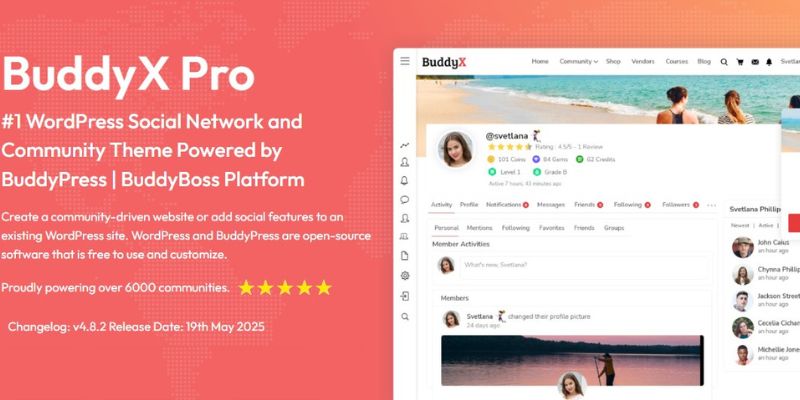
BuddyX is a WordPress-compatible theme designed to create fully functional online communities. It’s optimized for seamless integration with BuddyPress and BuddyBoss. When paired with either, it unlocks a vast range of community-building tools, including member profiles, forums, activity feeds, private messaging, and group creation.
- Highlights: Mobile responsive layouts, compatibility with LearnDash for e-learning, gamification support through plugins like GamiPress, and WooCommerce integration for monetizing digital products.
- Best For: Educators, coaches, online course creators, and community builders who want design flexibility within WordPress.
- Pricing: BuddyX offers a free version with essential features, while the premium version starts at $59 per year.
With BuddyX, users benefit from regular theme updates, built-in SEO optimization, and multilingual support. It also supports Elementor, making it easy to design custom layouts without code. Whether you’re building a small niche group or a large-scale social network, BuddyX provides the foundation for a scalable and engaging community experience.
2. Reign Theme
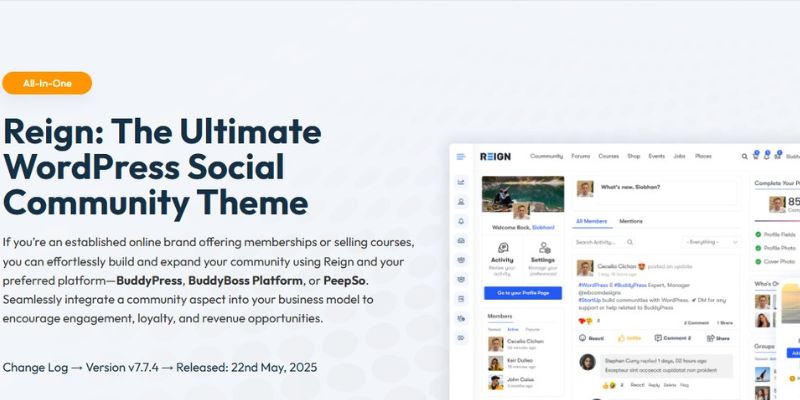
Reign is another powerful WordPress theme, specifically designed for building social communities. It offers a seamless user experience with pre-built community demos, advanced customization options, and responsive design. With sleek design templates and deep integration with BuddyPress and BuddyBoss, it enables a range of interactive features, including forums, member directories, activity streams, and group collaborations.
- Highlights: Deep integration with LMS plugins like LearnDash, Elementor support for drag-and-drop design, WooCommerce compatibility, and built-in support for gamification features.
- Best For: Brands, educators, and creators seeking a sleek, user-centric design experience that scales with their community’s growth.
- Pricing: Reign’s pricing starts at $99 per year for a single-site license.
Reign also includes support for multilingual sites, GDPR compliance, and mobile optimization, making it a professional-grade choice for community builders looking to deliver both aesthetic appeal and functional depth.
Also Read: The Negativity in Online Communities
3. Mighty Networks

Mighty Networks is an all-in-one solution for building community-first businesses. It provides a powerful mix of tools that help you run online courses, create memberships, organize live and asynchronous events, and nurture rich community discussions—all within a single branded platform.
- Highlights: Native mobile apps for iOS and Android, advanced member segmentation, branded landing pages, robust analytics, and a community AI assistant to boost engagement.
- Best For: Entrepreneurs, creators, and educators looking to build scalable, mobile-first communities that blend learning with networking.
- Pricing: Plans start at $49 per month for the Community Plan.
One of Mighty Networks’ standout features is its ability to combine community and commerce in one cohesive ecosystem. It allows for tiered membership levels, gated content, and built-in payment gateways. Whether you’re starting a small mastermind or scaling a multi-course empire, it provides the infrastructure and polish needed to support meaningful connections.
4. Circle

Circle is a modern platform tailored for creators and educators. It offers a sleek interface where members can participate in threaded discussions, live events, and private chats.
- Highlights: Custom domains, member analytics, embeddable widgets, and Zapier integration.
- Best For: Course creators, coaches, and professional communities.
- Pricing: Pricing starts at $89 per month for the Professional Plan.
Circle brings community, content, and events under one clean dashboard. You can also integrate with your website or use Circle as a standalone community hub.
5. Discourse

Discourse is an open-source forum software that encourages thoughtful conversations. With a modern UI and powerful moderation tools, it enables long-form discussions and categorization.
- Highlights: Infinite scroll, tagging system, trust levels, and API access.
- Best For: Developers, niche forums, and knowledge-sharing communities.
- Pricing: Free for self-hosted; hosted plans start at $100 per month.
It requires some technical setup but offers extensive flexibility. The platform also has built-in gamification and badge systems to encourage participation.
Also Read: Why People Join Online Communities?
6. Khoros Communities

Khoros Communities is a robust enterprise-grade community platform that helps brands build customer-centric online spaces. Designed for larger organizations, it supports forums, idea exchanges, peer-to-peer engagement, and integration with CRM systems. Khoros is best known for enhancing customer experience through scalable and data-driven community solutions.
- Highlights: AI-powered moderation, advanced analytics, extensive APIs, multilingual support, and tight integration with Salesforce and Zendesk.
- Best For: Large-scale enterprises, SaaS platforms, and customer support teams looking to deflect tickets and boost satisfaction.
- Pricing: Custom pricing based on community size, features, and support needs. Contact Khoros for a quote.
Khoros stands out with its focus on measurable business outcomes. Whether you’re aiming to reduce customer service costs or increase engagement across global audiences, Khoros Communities offers deep functionality, flexible workflows, and a proven structure for growing vibrant, self-sustaining online networks.
7. Kajabi

Kajabi is primarily known for course and content marketing, but its community feature allows membership groups, challenges, and events inside a learning ecosystem.
- Highlights: Funnels, email automation, course hosting, and upsell tools.
- Best For: Knowledge entrepreneurs and coaches monetizing their expertise.
- Pricing: Plans start at $119 per month.
It integrates education, marketing, and community seamlessly. Kajabi’s mobile app also helps users engage on the go.
8. Slack

Slack is a communication tool turned community space, especially for professional networks. It supports real-time messaging, channels, and integrations.
- Highlights: Integration with Google Drive, Zoom, and project tools.
- Best For: Remote teams, coworking groups, and business communities.
- Pricing: Free version available; paid plans start at $245.25 per user per month.
Its workflow-friendly environment supports daily collaboration and community development. Slack also offers powerful search functionality and notifications.
9. Facebook Groups

Facebook Groups is a widely used platform for building communities, thanks to its massive user base. It’s suitable for informal groups, hobbyists, and businesses looking to engage with customers.
- Highlights: Event scheduling, polls, file sharing, and group insights.
- Best For: Beginners or those with existing Facebook followings.
- Pricing: Free; paid advertising options available.
However, limited control and algorithm interference can restrict growth and reach. Still, for casual communities and widespread reach, Facebook remains a go-to.
Also Read: The Importance of Online Communities
10. Vanilla Forums

Vanilla Forums is a flexible platform for building branded communities. It’s ideal for companies looking to offer customer support, engage users, or create a knowledge base.
- Highlights: Gamification, moderation, multilingual support.
- Best For: Customer service and product-focused communities.
- Pricing: Free for open-source; cloud-hosted plans start at $689 per month.
Its enterprise-grade features make it ideal for scaling support networks. Vanilla also provides insights and reporting dashboards.
11. Geneva

Geneva is a mobile-first community platform that combines group chat, voice, and video into one app. It’s designed for communities that need real-time interaction.
- Highlights: Audio rooms, scheduled events, announcements, and roles.
- Best For: Creative collectives, social groups, and Gen Z communities.
- Pricing: Free to use.
It’s vibrant, informal, and mobile-native, appealing to younger users. Geneva also includes powerful admin tools for managing group behavior and access.
12. Patreon

Patreon is a platform that enables creators to build membership-based communities. It’s ideal for artists, podcasters, writers, and other creators looking to monetize their work through subscriptions.
- Highlights: Tiered memberships, posts, polls, and direct communication.
- Best For: Artists, podcasters, YouTubers, and creators.
- Pricing: Patreon takes a commission of 5% to 12% of earnings, depending on the plan.
It adds monetization to the community equation naturally. Patreon’s integrations and loyalty tools help deepen engagement.
13. Discord

Discord is a popular platform for building communities, especially in gaming and tech circles. It offers real-time chat, voice, and video features, making it a dynamic space for community engagement.
- Highlights: Channel organization, bots for automation, role-based permissions.
- Best For: Tech-savvy communities, gaming clans, and digital creators.
- Pricing: Free version available; Discord Nitro starts at $9.99 per month.
Its casual, conversational vibe helps build tightly-knit member relationships. With options for private servers, moderation tools, and integrations, Discord is versatile enough for both informal and structured communities.
Also Read: 10 Best Social Media Platforms That Pay
14. Hivebrite

Hivebrite is a customizable community platform for organizations and institutions. It’s well-suited for alumni networks, professional associations, and membership organizations.
- Highlights: Event tools, directories, fundraising, and branding.
- Best For: Universities, associations, and exclusive communities.
- Pricing: Pricing available upon request.
It’s enterprise-ready and supports advanced member management. Hivebrite also allows job boards, volunteer programs, and member-led events.
15. Zapnito

Zapnito is a knowledge-sharing community platform built to help organizations showcase expertise and foster thought leadership. It’s ideal for publishers, research institutions, and professional associations that want to engage niche audiences through expert-led discussions, video panels, and content hubs.
- Highlights: Expert Q&A panels, private communities, knowledge hubs, SEO optimization, and built-in video and content publishing tools.
- Best For: B2B organizations, academic groups, and knowledge-based networks that prioritize intellectual engagement and brand authority.
- Pricing: Pricing available upon request.
Zapnito excels in turning passive audiences into active collaborators by enabling members to share insights, co-create content, and attend virtual sessions within a branded environment. It’s especially effective for building credibility and deepening trust within specialized communities.
16. Thinkific

Thinkific is primarily an online course platform, but it also offers community-building tools. It’s great for educators and trainers who want to combine learning with community engagement.
- Highlights: Topic channels, member notifications, and content linkage.
- Best For: Educators and online schools looking to engage learners.
- Pricing: Free plan available; paid plans start at $36 per month.
It’s an excellent choice for those already invested in the Thinkific ecosystem. The platform emphasizes student engagement through course-linked community discussions.
17. Substack

Substack is a popular platform primarily known for newsletters, but it’s increasingly being used as a hub for creator-driven communities. Beyond email delivery, Substack now includes features like comments, community threads, and subscriber-only discussions that help writers and independent creators form tight-knit communities around their content.
- Highlights: Email newsletters, community threads, paid subscriptions, podcast hosting, and analytics.
- Best For: Writers, journalists, and creators who want to build a community around long-form content and monetise it through subscriptions.
- Pricing: Substack takes a 10% commission on paid subscriptions.
Substack’s simplicity is its strength. It allows creators to focus on building relationships with their audience without needing a complex website or infrastructure. As the platform evolves, it continues to blend publishing and community in a way that empowers niche experts to grow influence and income.
18. FeverBee

FeverBee is a community consultancy and platform that helps organizations build thriving online communities. It offers strategic guidance and tools to grow engagement.
- Highlights: Community consulting, behavioral science models, training programs, and strategic community growth resources.
- Best For: Brands and organizations that already have a platform but need expert guidance to build stronger community engagement and long-term success.
- Pricing: Pricing available upon request.
FeverBee helps community managers avoid common pitfalls by focusing on proven engagement tactics, scalable frameworks, and long-term member retention strategies. It’s ideal for leaders who want to invest in the deeper mechanics of what truly drives community growth and member loyalty.
Also Read: Why Online Beauty Communities Are So Appealing
19. PlatformOS

PlatformOS is a highly customizable platform for building complex online communities and marketplaces. It’s suitable for large-scale projects requiring bespoke solutions.
- Highlights: Enterprise-grade security, API-first architecture, GraphQL support, flexible data models, and multilingual capabilities.
- Best For: Developers, large enterprises, and brands that require a completely tailored community solution with custom features.
- Pricing: Pricing available upon request.
What makes Platform OS shine is its infrastructure-first approach. You can develop community portals that are deeply integrated with existing systems or completely bespoke, without being restricted by traditional templates or platform limitations. It’s the choice for organizations with a technical team and a need for innovation.
20. LinkedIn Groups

LinkedIn Groups is a feature of LinkedIn that allows professionals to create and join communities around shared interests. It’s ideal for networking, knowledge sharing, and industry-specific discussions.
- Highlights: Professional credibility, built-in network, easy visibility.
- Best For: B2B communities, industry groups, and corporate knowledge hubs.
- Pricing: Free; LinkedIn Premium starts at $29.99 per month.
Its professional focus is great for serious conversations. LinkedIn Groups are especially valuable for networking and recruiting.

Finding Your Platform Fit
Choosing from the best platforms to build an online community depends entirely on your audience, goals, and level of control. If you’re looking for flexibility and design freedom, WordPress-based themes like BuddyX and Reign offer powerful solutions. For those wanting simplicity or mobile-native experiences, platforms like Circle, Discord, or Geneva might be a better fit. Evaluate your needs, test a few options, and focus on creating an authentic space where your members feel heard and valued.
Whatever route you choose, remember: the platform is the stage, but your people bring the magic.
Interesting Read
The Ultimate Guide to Brand Community Building Software