


Running a WooCommerce store teaches you one lesson very quickly: numbers alone do not equal insight. At first, I relied on the default WooCommerce reports and assumed they were good enough. Sales were coming in, orders were processing, and revenue looked fine until I needed answers that actually mattered.
Questions like which products are truly profitable, where customers are dropping off, and what changed after that promotion could not be answered clearly. Instead of insight, I got spreadsheets and partial data.
That is when I decided to test reporting plugins seriously.
I installed, configured, and used ten different tools on real WooCommerce stores with real data. did not skim dashboards or rely on feature lists. I lived inside these plugins for weeks. This article is the result: a first-person, honest review of the WooCommerce Reporting Plugins that actually help and the ones that only look impressive.

What WooCommerce Reporting Really Is (And What It Is Not)
Before diving into tools, it helps to clarify what reporting actually means for store owners. Reporting is not about graphs for the sake of graphs. It is about clarity.
Good reporting answers questions quickly:
- What is working
- What is not
- What changed
- What should I do next
Bad reporting hides answers behind filters, menus, and data overload. During testing, I found that many WooCommerce reporting plugins fail not because they lack features but because they lack focus.
The best tools simplify decisions. The worst ones made me feel like I needed a data analyst just to understand yesterday’s sales.
Why I Tested These Plugins Myself Instead of Trusting Reviews
Most plugin reviews stop at screenshots. I wanted to know what happens after installation when real orders sync, refunds appear, and data starts to contradict assumptions.
So I tested each plugin the same way:
- Connected to live WooCommerce stores
- Synced historical and new orders
- Used them daily, not once
- Compared results against WooCommerce core data
- Evaluated speed, accuracy, and clarity
I approached this like a small business owner would, with no custom code, no advanced tracking setups, and no data teams. That perspective shaped everything you are about to read.
How I Judged Each Plugin (My Actual Criteria)
To keep things fair, every plugin was evaluated on the same core factors:
- Ease of setup and onboarding
- Accuracy of sales and order data
- Clarity of reports and dashboards
- Usefulness for decision-making
- Scalability as the store grows
Only plugins that genuinely helped me understand my store earned strong recommendations.
The 10 WooCommerce Reporting Plugins I Tested
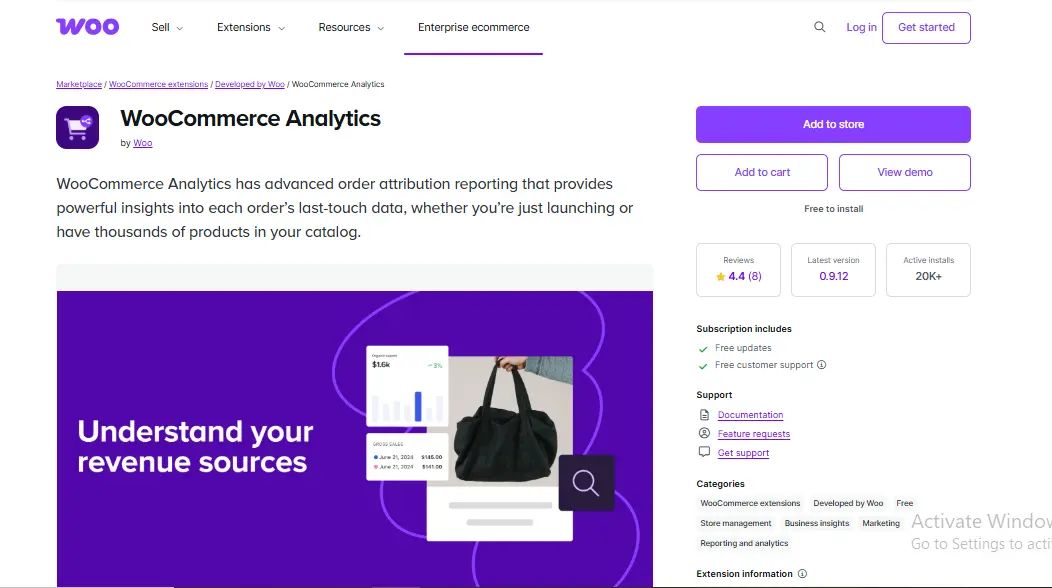
1. WooCommerce Analytics (Core Plugin)
I went into testing WooCommerce Analytics expecting to dismiss it quickly. To my surprise, it has improved significantly over the years. The interface is cleaner, the filters are usable, and basic reporting is finally readable.
For beginners, this is often the first reporting tool they encounter, and for simple needs, it works. I could track sales, orders, and products without confusion. Daily and monthly comparisons were easy to understand.
However, I quickly hit its limits. There is no deep customer analysis, profitability tracking is basic, and segmentation is minimal. It is a good starting point, but not a long-term solution for serious growth.
Best for: Absolute beginners
Strength: Native integration
Limitation: Shallow insights
2. YITH WooCommerce Reports
YITH reporting plugins feel like they were designed by people who understand WooCommerce users. The layout felt familiar immediately, and the setup was painless.
What I liked most was how YITH balances simplicity and detail. Reports are structured logically, and I did not feel overwhelmed. Sales, customers, and products are separated cleanly, which helped me focus on one question at a time.
That said, YITH does not try to be a full analytics platform. It excels at operational reporting but stops short of advanced forecasting or predictive insights. Still, among WooCommerce reporting plugins, this is one of the most beginner-friendly options I tested.
Best for: Small business owners
Strength: Clear, structured reports
Limitation: Limited advanced analytics
3. Metric
Metorik was the standout tool in my testing. Once connected, it immediately reframed how I looked at my store. Instead of raw data, it highlighted trends, anomalies, and customer behavior.
I especially appreciated how it surfaced insights without asking me to build reports. Churn, repeat purchases, and revenue shifts were visible at a glance. I spent more time acting on insights than configuring dashboards.
Among all WooCommerce reporting plugins, Metorik felt the most decision-ready.
Best for: Owners who want clarity fast
Strength: Actionable insights
Limitation: Paid subscription
4. Advanced WooCommerce Reporting
This plugin gives you near total control. I could build complex reports, apply layered filters, and export almost anything.
However, control comes at the cost of usability. I spent significant time configuring reports before seeing value. For beginners, that learning curve can feel exhausting.
If you know exactly what you want to measure, this plugin delivers. If not, it can slow you down.
Best for: Experienced users
Strength: Custom reporting
Limitation: Steep learning curve
5. WP All Export (WooCommerce Add-On)
WP All Export performed flawlessly when it came to exporting data. Orders, customers, and products were all clean and reliable.
However, it does not interpret anything. You get numbers, not answers. I found it useful as a companion tool, not a standalone reporting solution.
Used alongside other WooCommerce reporting plugins, it becomes powerful. On its own, it is incomplete.
Best for: Spreadsheet users
Strength: Data accuracy
Limitation: No insights
6. Putler
Putler impressed me with its customer analytics. Lifetime value, cohorts, and retention tracking were genuinely useful.
The downside was onboarding. It took time to understand where everything lived. Once I adjusted, the insights were strong, but beginners may feel lost initially.
This plugin rewards patience.
Best for: Customer-focused analysis
Strength: LTV and cohorts
Limitation: Learning curve
7. MonsterInsights (WooCommerce Reports)
MonsterInsights shines when marketing matters most. I tested it primarily for traffic-to-revenue tracking.
Seeing conversions alongside sessions and campaigns was helpful. However, operational metrics like refunds and fulfillment were lacking.
It pairs well with other WooCommerce reporting plugins, but it cannot stand alone.
Best for: Marketing insights
Strength: Google Analytics integration
Limitation: Weak operational data
8. Metrilo
Metrilo felt like a business analytics platform rather than a simple plugin. Retention, segmentation, and growth metrics were excellent.
Setup took longer, and the tool assumes you want strategic insight rather than quick sales checks. For scaling stores, it is valuable. For small shops, it may feel excessive.
Best for: Growth-focused stores
Strength: Strategic insights
Limitation: Setup complexity
9. Glew.io
Glew handled large datasets smoothly. I could zoom out for trends or drill into details without friction.
The interface was dense but logical. Among WooCommerce reporting plugins, this one scales exceptionally well.
It is not the simplest, but it grows with your store.
Best for: Scaling businesses
Strength: Deep analytics
Limitation: Not beginner simple
10. WooCommerce Export Plugins
These plugins do exactly what they promise: export data reliably. I tested several variants, and all performed consistently.
Like other export tools, they lack dashboards or insights. Useful, but limited.
Best for: Data extraction
Strength: Reliability
Limitation: No analysis
Common Reporting Mistakes I Saw Repeatedly
Across all tools, the same mistakes kept appearing:
- Tracking revenue instead of profit
- Watching daily fluctuations instead of trends
- Using too many plugins instead of the right one
- Expecting reports to replace decision-making
The best WooCommerce reporting plugins support judgment. They do not replace it.
What Metrics Actually Mattered in My Testing
After weeks of analysis, these metrics consistently drove better decisions :
- Net revenue after refunds
- Repeat customer rate
- Product-level profitability
- Conversion trends over time
Plugins that surfaced these clearly stood out immediately.
How to Choose the Right Reporting Plugin for Your Store
Before installing anything, ask yourself:
- Do I need clarity or depth
- Am I optimizing marketing or operations
- Do I want dashboards or exports
Once those answers are clear, choosing among WooCommerce reporting plugins becomes far easier.
Comparison Table: Side-by-Side Results
| Plugin | Ease of Use | Insight Depth | Best Use Case |
|---|---|---|---|
| WooCommerce Analytics | High | Low | Beginners |
| YITH Reports | High | Medium | Small businesses |
| Metric | High | Very High | Decision clarity |
| Advanced WC Reporting | Medium | High | Custom reports |
| WP All Export | Medium | Low | Data exports |
| Putler | Medium | High | Customer analytics |
| MonsterInsights | High | Medium | Marketing |
| Metrilo | Medium | Very High | Growth |
| Glew.io | Medium | Very High | Scaling stores |
| Export Plugins | High | Low | Raw data |

Final Thoughts After Rewriting and Retesting Everything
After rewriting this review and revisiting my testing notes, one conclusion remains unchanged: reporting only matters if it leads to action.
The best WooCommerce reporting plugins helped me think clearly. The worst ones distracted me with numbers.
Start simple. Add depth when needed. And remember, clarity beats complexity every time.
Interesting Reads:
10 Best Free WordPress Coming Soon Page Plugins I Recommend After Real Testing
What I Found After Testing the 10 Best WordPress Google Maps Plugins
My Honest Take on the Top 10 Social Share Plugins for WordPress